Skip to Content

What is The Thriving Kids Program: A Guide for Families of Children with Developmental Delay or Autism

If you’re hearing more about the Thriving Kids program, you’re probably wondering what it means for your child and whether it will affect your current therapy or NDIS supports.

Understanding how Thriving Kids, Foundational Supports and the NDIS fit together can feel confusing. This guide explains what is changing, who Thriving Kids is designed for and what families of children aged eight and under need to know.
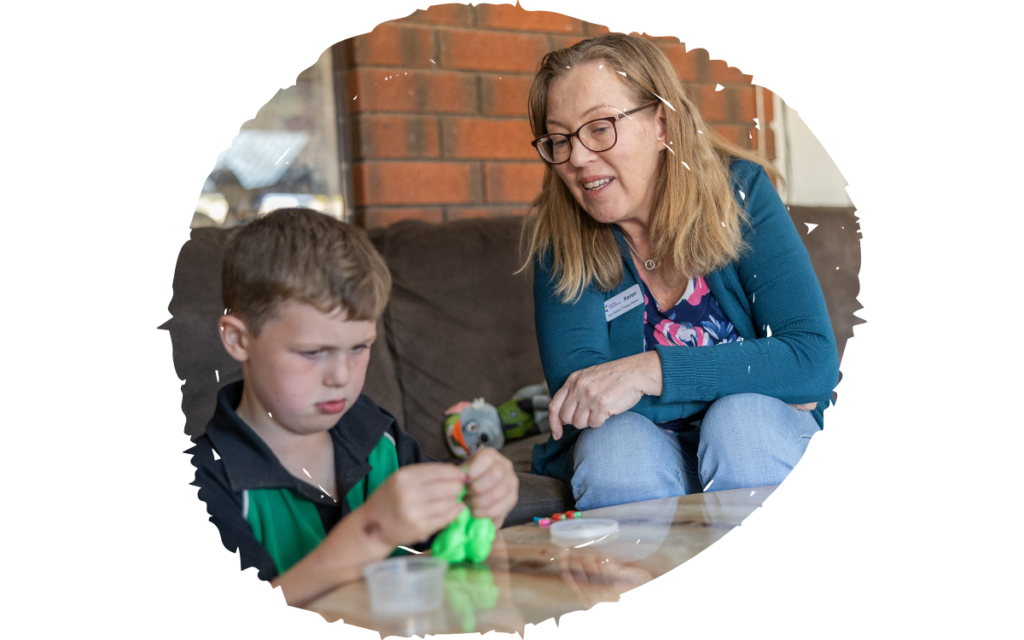

Woman with glasses helps a boy with a hands-on craft at a low table in a cozy room with a brick wall behind them.

If your child already has an NDIS plan

The introduction of Thriving Kids does not automatically end your child’s NDIS supports.

Children aged eight and under who are accessing the NDIS before 1 January 2028 will continue to have their eligibility reassessed under the criteria that applied before that date until they turn nine. From 2028, the new eligibility criteria will apply once they reach nine.

This does not guarantee ongoing NDIS eligibility or an unchanged support budget. Separate changes to some NDIS support budgets follow different timelines, which we explain below.

Thriving Kids at a glance

QuestionAnswer
 What is Thriving Kids?A new support pathway for young children with developmental delay or autism, focused on connecting families with appropriate help without requiring an individual NDIS package
Who is it for?Children aged eight and under with developmental delay and/or autism and low to moderate support needs, and their families.
Is a diagnosis required?No. Children will not need a formal diagnosis to access Thriving Kids. Support is intended to be based on the child’s developmental needs rather than diagnosis alone. Families will need to check if an assessment or referral is required to access services.
When does it start?Thriving Kids started rolling out in October 2026. Supports are expanding in stages, and availability varies by location.
When is full rollout planned?The Australian Government says all Thriving Kids supports will be rolled out by 1 January 2028.
What happens in 2028?From 1 January 2028, planned changes to NDIS access arrangements for children are expected to begin. Children with permanent and significant disability, including children with high support needs, may continue to access the NDIS subject to the eligibility requirements in place at the time.
What should families do now?Continue using your child’s current supports within their available funding and plan conditions. Check NDIA notices and discuss any changes to funding, needs or appointments with your child’s therapy team.

What is the Thriving Kids program?

The Thriving Kids program is a new national early childhood support pathway for children aged eight years and under with developmental delay and/or autism who have low to moderate support needs.

The Thriving Kids initiative is designed to help children and families access support earlier, without needing to rely on an individual NDIS package.

Instead of focusing on diagnosis alone, the Thriving Kids scheme aims to connect families with support based on a child’s developmental and functional needs.

Support may include:

  • Parent and caregiver coaching
  • Information about child development
  • Allied health services
  • Support to build everyday skills
  • Early intervention and developmental supports
  • Help navigating local services.


Caregiver supervising a young girl on a playground swing outdoors, smiling and helping her swing.

The goal of the Thriving Kids model is to help children build skills, confidence and independence through everyday life experiences at home, childcare, kindergarten, school and in the community.

What is the Thriving Kids Program designed to achieve?

Thriving Kids aims to identify developmental needs earlier and help families find appropriate support without first needing a formal diagnosis or an individual NDIS plan.

It focuses on helping families understand their child’s development, build confidence in supporting them and connect with services when extra help is needed.

Who is eligible for the Thriving Kids program?

Thriving Kids is designed for children aged eight years and under with developmental delay and/or autism who have low to moderate support needs, along with their families and carers.

A formal diagnosis is not required. Families can seek information and support when they have concerns about their child’s development, everyday skills or participation.

Access to targeted supports, such as allied health services, will depend on the child’s needs and the service arrangements in their state or territory.

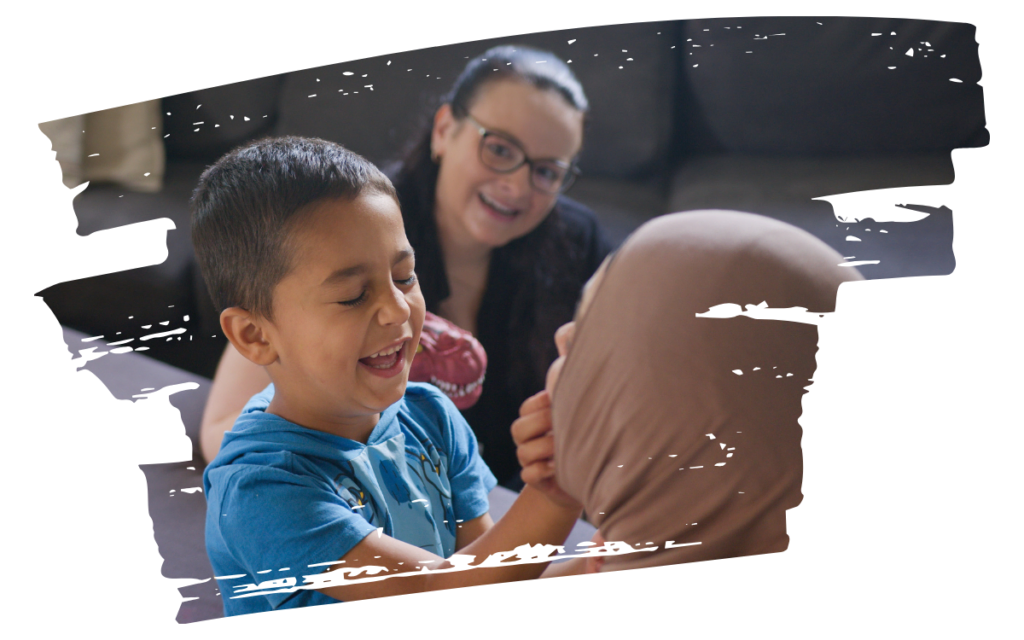
Smiling boy in a blue shirt shakes hands with an adult wearing tan, as a woman with glasses watches in the background.

What support will be available through the Thriving Kids scheme?

Thriving Kids includes information, family programs and targeted developmental supports. Services are being introduced in stages and will vary by location.

Support may include:

  • Information about child development and help finding local services.
  • Parent and carer coaching, practical resources and family programs.
  • Peer support groups and supported playgroups.
  • Allied health services, such as occupational therapy, speech pathology and psychology.
  • Low-cost assistive technology, such as communication aids.
  • Additional support to help families build their child’s skills during everyday activities.

Targeted supports may be delivered individually or in groups, in person or online. What your child can access will depend on their needs and local service arrangements..

Do families need an NDIS plan to access Thriving Kids?

No. Families do not need an individual NDIS plan to access Thriving Kids supports.

Before booking a service, check whether it is provided through Thriving Kids, what access requirements apply and whether there are any costs. A private or Medicare-funded appointment should not be assumed to be a Thriving Kids service or fully covered by the program.

What are foundational supports and how do they fit with the NDIS?

Foundational Supports are community-based disability supports being introduced across Australia.

The new Foundational Supports system is designed to sit alongside the NDIS and provide support for people with disability, developmental delay and their families.

Foundational Supports are expected to include:

General supports

Available to a broad range of families and individuals through:

  • Information
  • Advice
  • Service navigation
  • Peer support
  • Community connection

Targeted supports

Additional support for people who require assistance but may not need an individual NDIS package.

The Thriving Kids program forms part of the broader Foundational Supports system and is the first major model being rolled out specifically for young children.

Thriving Kids, foundational supports and the NDIS: what’s the difference?

Many families are searching for information about the difference between Thriving Kids, Foundational Supports and the NDIS.

Thriving Kids program

A support pathway for children aged eight and under with developmental delay and/or autism who have low to moderate support needs.

Foundational Supports

Broader community-based disability supports for people with disability and developmental delay outside individual NDIS funding packages.

NDIS

The NDIS provides individual funding for eligible people who meet its access requirements. Current access pathways include disability requirements and early intervention requirements, including specific requirements for children younger than six with developmental delay.

PathwayBroad purposeIntended usersIndividual NDIS funding package?
Thriving KidsEarly developmental help and family supportChildren aged eight and under with developmental delay and/or autism and low-to-moderate support needs, plus their families.No
Foundational supportsGeneral and targeted community-based disability supportPeople with disability or developmental delay, their families and carers.No
NDISIndividually funded disability supportsPeople who meet NDIS access requirements.Yes, with funding based on individual needs

When does thriving kids start?

Thriving Kids is scheduled to begin rolling out progressively from October 2026, with full rollout planned by 1 January 2028.

October 2026: Thriving kids supports begin rolling out

Thriving Kids supports begin from October 2026, with services expanding progressively. Families should not assume that the complete national model, or every type of support, will immediately be available everywhere. Local availability will depend on the services established in each state and territory.

As services roll out, families will have more information about what is available to them and what, if anything, they need to do.

1 January 2028: Full rollout and NDIS access changes

Full rollout is planned by 1 January 2028, when the associated changes to NDIS access are also expected to begin [2]. For families whose child already accesses the NDIS, this does not mean their support will suddenly stop on 1 January 2028. Existing participants will be supported with transition and reassessment, rather than everyone moving to a new pathway at once.

Under the announced approach, new applicants aged eight and under with developmental delay and/or autism and low to moderate support needs would access Thriving Kids rather than the NDIS.

Children with permanent and significant disability, including those with developmental delay or autism and substantially reduced functional capacity, may continue to qualify for the NDIS under the eligibility criteria applying at that time [2].

Note: Changes to NDIS access and changes to support budgets follow different timelines. Remaining eligible for the NDIS does not guarantee your child’s therapy budget will stay the same until 2028. See the section below for details.

If you’re unsure what any of these changes mean for your child, you don’t need to make any decisions alone. Your therapy team will be alongside you to support your child and family with any changes applicable to your child’s individual plan.

What does thriving kids mean for my child’s current NDIS therapy?

Thriving Kids does not automatically end your child’s NDIS-funded therapy. Families can continue using their current plan and funded supports until their plan is reassessed or renewed, within the available funding and plan conditions. Every child’s circumstances are different, and any future pathway will depend on their individual needs and the eligibility requirements applying at the time.

Child’s circumstancesWhat families should know
Already has an NDIS planChildren aged eight and under accessing the NDIS before 1 January 2028 will have eligibility reassessed under the previous criteria until they turn nine. From 2028, the new criteria apply once they reach nine. This does not guarantee ongoing eligibility but your therapy team will support your child and family with any transitions as needed.
Applying to NDIS before 1 January 2028Current access arrangements continue until that date, and your child must meet eligibility requirements. The announced transition protection refers to children already accessing the NDIS before the deadline, not simply those who have submitted an application. If your child is applying, the outcome will continue to be based on the eligibility requirements in place at that time.
Has low-to-moderate support needs after 2028Under the announced approach, new applicants aged eight and under with developmental delay and/or autism and low-to-moderate support needs would receive Thriving Kids support rather than an individual NDIS plan. Existing participants have the separate reassessment arrangements described above.
Has substantial functional support needsThe NDIS will remain available to children with permanent and significant disability, including developmental delay and/or autism with high support needs, provided they meet the eligibility requirements applying at the time. The pathway may change, but children with permanent and significant disability will still be able to apply for support through the NDIS.

Separate changes to NDIS funding apply to social, economic and community participation supports and improved daily living skills budgets. These changes began for new and reassessed plans on 1 October 2026 and will apply to other participants as their plans are renewed from 1 February 2027. They do not apply to every budget category.

Diagnosis vs functional needs

Having autism or developmental delay doesn’t automatically grant NDIS eligibility. Eligibility considers how a child’s disability impacts their everyday functioning, including:

  • communication
  • self-care
  • safety
  • mobility
  • learning
  • relationships
  • participation in everyday activities

From 1 January 2028, NDIS access will place greater emphasis on functional capacity, meaning the support a child needs to take part in everyday tasks and activities, rather than focusing only on their diagnosis.

Information from families, educators and relevant health or allied health professionals help build a clearer picture of the child’s functional needs across different environments and situations.

Is my child eligible for the NDIS if they have autism?

Having an autism diagnosis does not automatically mean a child is eligible for the NDIS.

NDIS eligibility is based on how significantly a child’s disability affects their functional capacity and participation in everyday life, not diagnosis alone.

When considering eligibility, the NDIA may look at how a child is functioning in areas such as:

  • communication
  • learning
  • self-care
  • mobility
  • social interaction and relationships
  • participation in everyday activities

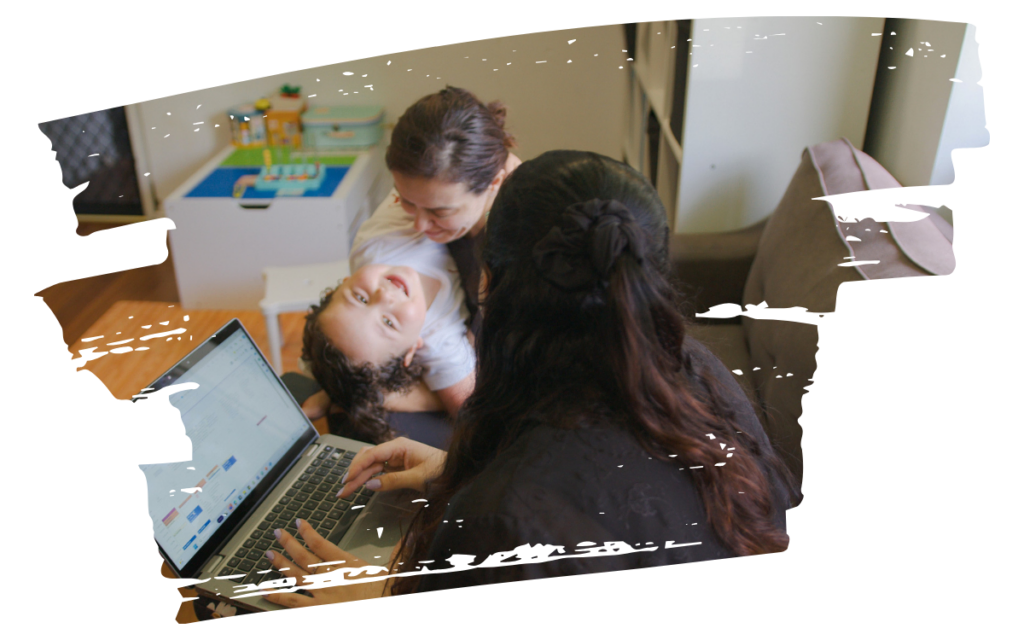
Child lying on a table with a big smile, while an adult leans over and another person works on a laptop nearby in a cozy room.

Some autistic children may meet NDIS eligibility requirements and receive an individual NDIS plan. Others may be better supported through Thriving Kids, Foundational Supports or other community-based services.

From 1 January 2028, NDIS access arrangements for children are expected to place a stronger focus on functional capacity and support needs. Children with permanent and significant disability, including autistic children with substantial functional support needs, may continue to access the NDIS if they meet the eligibility requirements applying at the time.

What should families do now?

For now, you don’t need to have every future change figured out. Keeping the focus on your child’s current needs and everyday goals can help your family feel prepared while further details are developed:

1.     Continue your child’s current therapy and NDIS plan unless something formally changes. Use supports within your plan’s available funding and conditions, and check any NDIA notices.

2.     Keep reports, therapy goals and information about your child’s functional needs organised. Include everyday examples of support needed at home, school and in the community [3].

3.     Discuss your child’s highest-priority goals with their therapy team. Identify what matters most for communication, daily activities, safety and participation.

4.     Ask what options may exist if the way support is funded or delivered changes. Discuss suitable alternatives, any costs and how to avoid gaps in support.

5.     Follow official Commonwealth, NDIA and state or territory updates as local Thriving Kids arrangements are developed. Check confirmed details rather than relying on social media.

6.     Ask your NDIA contact or early childhood partner about any changes that specifically affect your child’s plan or access arrangements. Clarify what applies, when, and whether you need to act.

Do not stop or change clinically important supports solely because future reforms have been announced. Discuss any necessary adjustments with your child’s treating professionals.

There will be more information to help families understand the changes as Thriving Kids is rolled out. In the meantime, asking questions, keeping your child’s information current and staying focused on their individual needs can help you feel more confident about the next steps.

How Everyday Independence can support your family

Everyday Independence provides early childhood supports for children under nine with an NDIS plan or paying privately. Service options depend on your child’s needs, location and practitioner availability.

Our early childhood key workers bring together the right therapy support around your child and family. We help identify everyday priorities and build skills through play, routines and activities at home, childcare, kindergarten, school and in the community.

If your child’s funding or support arrangements change, your therapy team can help you review their priorities and discuss available service options.

Get in touch to discuss your child’s needs and the services available in your area.

Common questions about Thriving Kids

Does my child need an autism diagnosis for thriving kids?

No. Children will not need an autism diagnosis to access Thriving Kids. Support will focus on developmental and functional needs, including the help a child needs to participate in everyday activities. Families can therefore seek help for developmental concerns without having to get a formal diagnosis first

Will Thriving Kids remove my child from the NDIS?

Not automatically. The announced NDIS access changes are planned from 1 January 2028, with specific transition arrangements for existing participants. Your child’s outcome will depend on their circumstances and the eligibility criteria applying when they are assessed or reassessed, not simply on Thriving Kids beginning.

Is Thriving Kids available across Australia?

Thriving Kids is a national model, but services will not be available everywhere at once. Rollout is scheduled from October 2026, with full implementation planned by 1 January 2028. Available services and local access arrangements will depend partly on how each state and territory implements the model. As the rollout progresses, more information will become available about the supports available in your local area.

My child isn’t eligible for the NDIS. What support can we still access?

Even if a child doesn’t qualify for the NDIS, support may still be available through Thriving Kids, Foundational Supports, mainstream health services, education supports and community programs.

Depending on your child’s needs and where you live, support may include:

  • parent coaching
  • allied health services
  • developmental checks
  • early intervention supports
  • information and service navigation
  • community and peer programs

The supports available will continue to expand as Thriving Kids rolls out across Australia.

What is a functional capacity assessment?

A functional capacity assessment looks at how a person’s disability affects their ability to manage and participate in everyday life. It may consider areas such as communication, self-care, mobility, learning, relationships and community participation.

Under the planned NDIS access changes, functional capacity will play a greater role in determining eligibility from 1 January 2028. The detailed assessment process is still being developed, so families do not need to understand or prepare for every part of it yet. Keeping clear information and everyday examples of your child’s support needs can help explain their individual circumstances.

References

[1] Department of Health, Disability and Ageing, 2026. Foundational Supports for People with Disability. https://www.health.gov.au/our-work/foundational-supports-for-people-with-disability

[2] Department of Health, Disability and Ageing, 2026. About the Changes to the NDIS. https://www.health.gov.au/our-work/ndis-legislation-changes/amendments/ndis-amendment-securing-the-ndis-for-future-generations-bill-2026/about-the-changes-to-the-ndis

[3] NDIS, 2026. How to Write an Early Childhood Provider Report. https://www.ndis.gov.au/providers/working-participants/early-childhood-providers/how-write-early-childhood-provider-report?

[4] About Thriving Kids, https://www.health.gov.au/our-work/thriving-kids/about-thriving-kids

[5] Supports being rolled out https://www.health.gov.au/our-work/thriving-kids/supports-being-rolled-out

Last edited 21/10/26

Become part of the Everyday Independence community by joining our monthly newsletter to learn about latest news and events across Australia.