
Skip to Content

NDIS Positive Behaviour Support

Recognising behaviour as an expression of unmet needs, we deliver support to reduce behaviors of concern and improve your quality of life.

NDIS Positive Behaviour Support

At Everyday Independence, we know that every behaviour happens for a reason. If you or someone you care for is showing behaviours of concern, our national team of behaviour support practitioners are here to help.

Our behaviour support practitioners work closely with you, your family and support network to understand what’s influencing behaviours of concern and what’s important to you. Together we’ll develop practical, personalised strategies to build skills, increase independence, improve wellbeing and enhance participation in everyday life.

Where restrictive practices are in place, we’ll support their safe use while working to reduce and wherever possible, eliminate the need for them.
What to Expect with Positive Behaviour Support

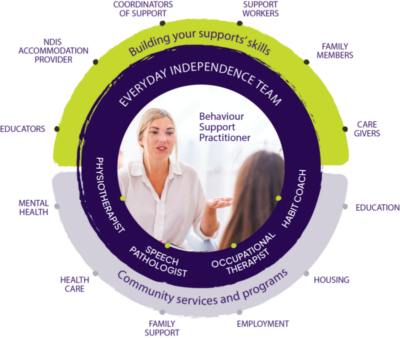
Our behaviour support practitioners are passionate about helping people live safer, more independent lives. With expertise across social work, occupational therapy, mental health, and developmental education they bring together the right support to help you build skills, reduce behaviours of concern and improve quality of life.

Our specialist positive behaviour support includes:

  • Assessing your abilities and the places you spend your time to identify why and when behaviours of concern occur
  • Developing a tailored plan with effective strategies to reduce behaviours of concern. If there are restrictive practices, we’ll deliver an Interim Behaviour Support Plan within 30 days of seeing you. We will also deliver a Comprehensive Behaviour Support Plan (which incudes a Functional Behaviour Assessment) within six months
  • Identifying strategies to help make your everyday environments safer and more supportive
  • Supporting your family, carers and support team with practical strategies to reduce triggers and minimise restrictive practices
  • Building skills like emotional regulation and develop better habits and routines to increase independence and improve quality of life
  • Connecting with essential services like mental health, family support, employment, and more to help you reach your goals
  • Children under nine years, working alongside a key worker to ensure the best outcomes are achieved.

Ready to Start Positive Behaviour Supports?

Who are you seeking services for? Select an option below to begin your enquiry.

A Team That Comes to You

Many NDIS participants benefit from support from more than one therapist. Using insights from your behaviour assessment, your behaviour support practitioner brings together the right Everyday Independence therapists to deliver targeted support across all areas of your life. For children under nine years, a key worker will also be part of the team to ensure the best possible outcomes.

Support doesn’t happen in a clinic – it happens where life does. We come to you at home, school, work and in the community, making therapy practical, personalised and easier to apply in everyday life. We call this approach the Everyday Way.

Funding for Positive Behaviour Support

To access positive behaviour support services, you’re NDIS plan needs to include Improved Relationships or Behaviour Support . This allows us to deliver specialist behaviour support focused on reducing behaviours of concern, minimising restrictive practices and improving participation in everyday life.

If you don’t have this funding, you may be eligible for our Improved Daily Living programs which build everyday skills, reduce moderate behaviours and develop healthy, sustainable habits.

Other Services We Deliver Across Australia

We provide therapy and employment services including:

Occupational Therapy

Occupational Therapy

NDIS Speech Pathology

Speech Pathology

NDIS Physiotherapy

Physiotherapy

NDIS Early Childhood Supports

Early Childhood Supports

NDIS Habit Coaching

Habit Coaches

Youth Employment and Vocational Services

Youth Employment and Vocational Services

Youth Lead Services

Youth Lead Practitioner Services

Looking for More Information?

Which best describes you?

Positive Behaviour Support Frequently Asked Questions

What are behaviours of concern?

Behaviours of concern are defined as behaviours that:

  • Put you or others at risk of harm (physical, emotional or psychological)
  • Limits your access to community activities, education, and support services
  • Or significantly impacts your quality of life in various ways.

For example, you might find it hard to control your reactions, present aggression and socially disruptive behaviour (e.g. screaming, verbal aggressions, physical aggression), run away, cause property damage or not be able to follow routines. These behaviours can stop you from learning new things, connecting with others or enjoying your day-to-day living.

What funding is needed to access behaviour support services?

NDIS participants with Improved Relationships or Behaviour Supports funding in their NDIS plan can access this service.  People with Improved Daily Living funding can access our Improved Daily Living Programs.   These programs help reduce behaviours of concern and develop healthier habits.

What is a behaviour support plan?

The journey to making positive life changes starts by creating a personalised Behaviour Support Plan. We create this plan with you and your trusted team. This plan becomes a go-to guide filled with solutions to tackle behaviours of concern and keep everyone safe. It ensures we’re all on the same page, focusing on skill-building.

First, we create an Interim Behaviour Support Plan if there are restrictive practices in use. You’ll receive this within 30 days of your assessment. You can share, review, and update it regularly with your team. The interim plan clearly sets the preventative, or environmental changes needed, and ensures consistency and predictability of support.

Then, within six months of seeing you, we’ll create a Comprehensive Behaviour Support Plan. This plan benefits from the extra time we’ve spent with you, additional assessments, and tested strategies. We’ll dig into what the behaviours mean, what you’re trying to express, what’s working well, and what needs more focus.

If a plan has a restrictive practice, we’ll send it to the Office of the Senior Practitioner in your state. This is for authorisation. We will also send it to the NDIS Commission to monitor the use of restrictive practices.

Our goal is to make sure everyone knows the plan and how to use it in their daily lives.

Read more here

Who are Everyday Independence Behaviour Support Practitioners?

Our behaviour support practitioners are specially trained. They focus on helping children, teenagers and adults who use challenging behaviours.

Selected for their skills and qualities, they offer exceptional therapy support with compassion and an open mind.

At Everyday Independence, our practitioners undergo continuous training and development to offer evidence-based, person-centered positive behaviour support to people of all ages.

What are restrictive practices?

A restrictive practice limits a person’s rights or freedom of movement. People typically use them in response to behaviours of concern, and they should always be a last resort. There are five types of regulated restrictive practices, these include chemical, physical, environmental, and mechanical restraints, and seclusion.

Our behaviour support practitioners work hard to reduce or eliminate restrictive practices. They aim to restore the person’s dignity and independence. Their goal is to improve the person’s quality of life.

Under the NDIS, some restrictive practices are regulated. They must be authorised by the respective States or Territory, with monitoring and reporting to the NDIS Commission of Quality and Safeguards.

Do Behaviour Support Practitioners write Outcome Reports?

Yes, we report on the outcomes the participant has achieved with the funding utilised, including any barriers and outlining what’s needed in the next NDIS plan to achieve their desired outcomes.

What NDIS therapy services does Everyday Independence provide?

Everyday Independence offers a full range of therapy supports to meet your needs, including:

  • Occupational therapy – enhance everyday life skills and participate fully in activities that matter most to you
  • Speech pathology – improve communication, speech, swallowing challenges for greater confidence and ease
  • Physiotherapy – therapy support for movement, connection, and participate in the activities you love.
  • Early childhood supports- helping children with disabilities and developmental delay to develop skills and make positive life changes.
  • Positive behaviour support – reduce behaviours of concern and achieve a better quality of life.
  • Developmental education – navigate key life transitions with strategies designed to empower and support independence
  • Habit coaching – practice routines and skills in between therapy sessions to build confidence and achieve goals.

Whether you’re just starting out with the NDIS or looking to make the most of your current plan, we’re here to support you every step of the way.

Are you recruiting Positive Behaviour Support Practitioners?

Everyday Independence is always looking for practitioners who are curious about behaviours and understanding why people use behaviours of concern. We’re currently recruiting occupational therapists, speech pathologists, mental health nurses, developmental educators, psychologists, and social workers to support people with disabilities to live a much better life.

Head over to our Positive Behaviour Support Career Opportunities to see a list of jobs available and to find out more.

Check the areas we service

View our therapy hub locations

Sign up to our newsletter

Become part of the Everyday Independence community by joining our monthly newsletter to learn about latest news and events across Australia.