Skip to Content

NDIS Youth Supports

Supporting positive life changes along young people’s journey towards adult independence.

Occupational therapy, speech therapy, physio, positive behaviour support, employment supports and programs for young people aged 9-25 years.

Therapy and employment supports for teens and young adults


Everyday Independence brings together occupational therapy, speech pathology, physiotherapy, positive behaviour support, employment supports and the Everyday Relationships Program to help young people aged 9–25 successfully transition into adulthood.

Whether it’s building everyday skills, communicating with confidence, moving more freely or preparing for work, our therapists and practitioners provide practical support in the places where everyday life happens.
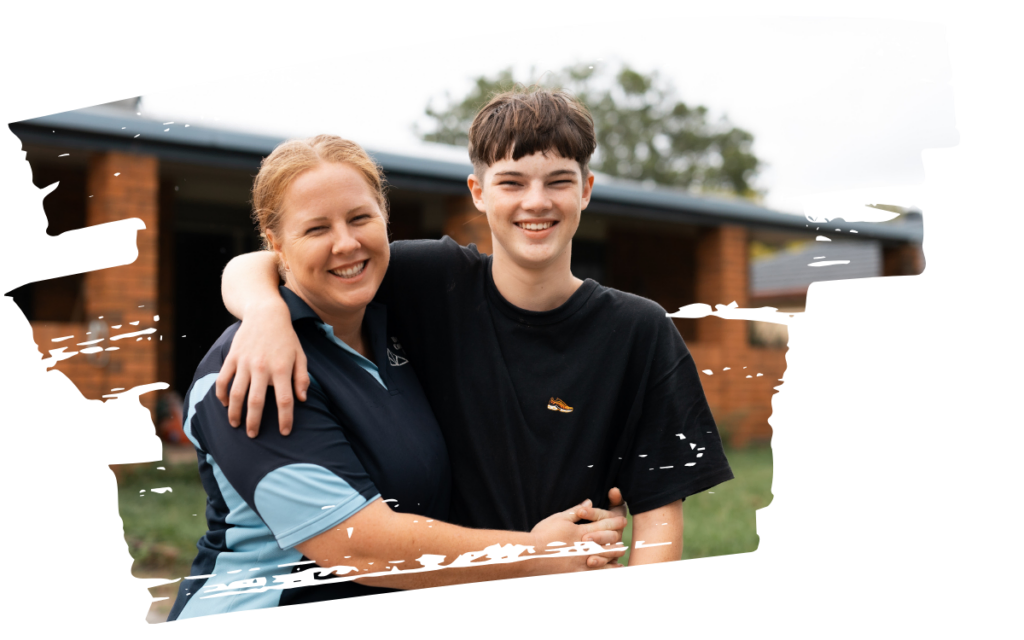

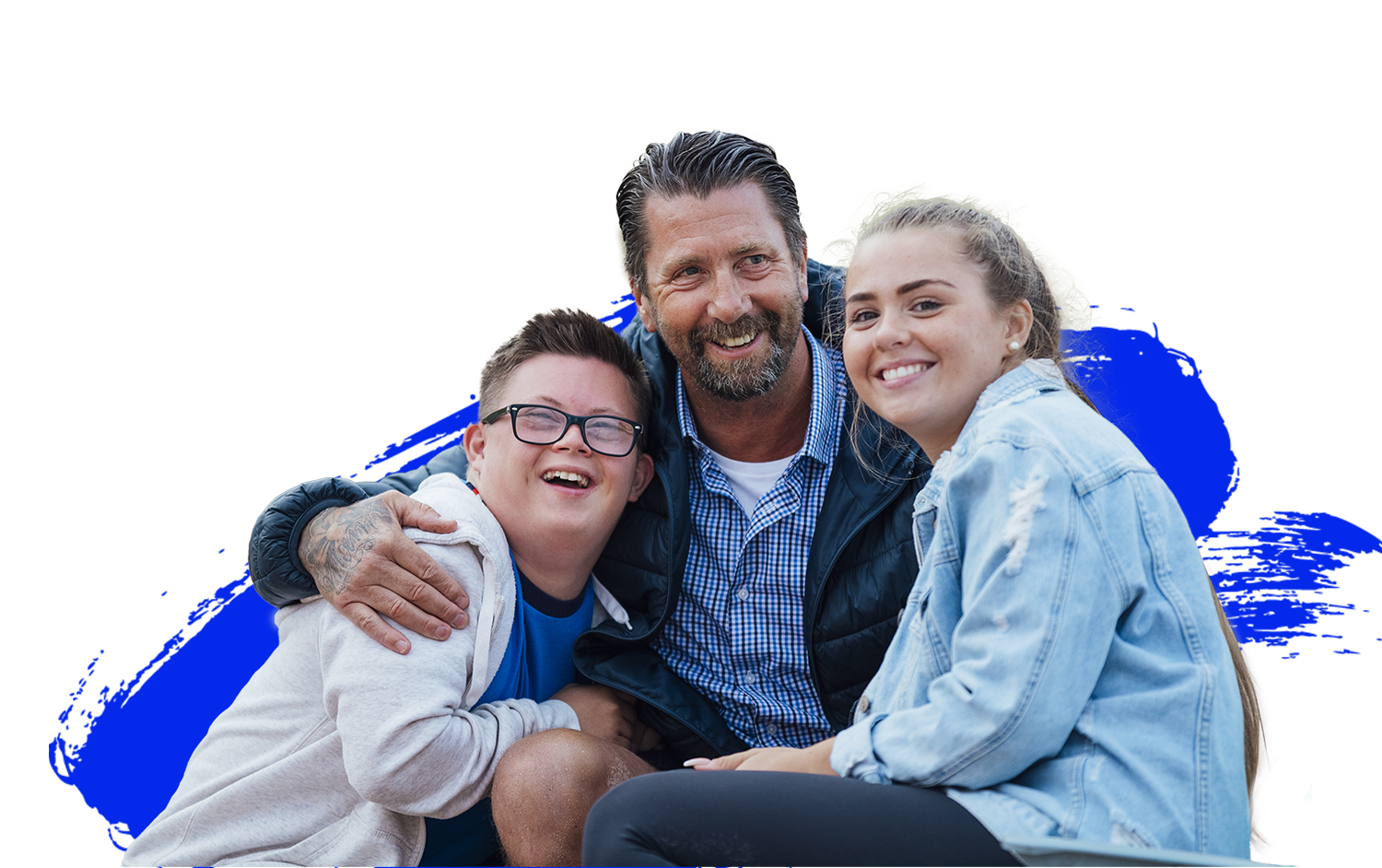
Smiling adult and teenage boy hug each other outdoors in front of a brick building.

Our services for young people include

Starting support with the right team around you.

When you’re supported by Everyday Independence, your youth team takes time to understand what’s important to you, and your family with your agreement, and works alongside you to build skills, confidence and independence.

This could include settling into high school, managing your time and money, building friendships and feeling more confident in social situations.

As you get older, your team can support you to explore employment opportunities, develop job skills, find and keep a job, and prepare for independent living.

Support that evolves with you

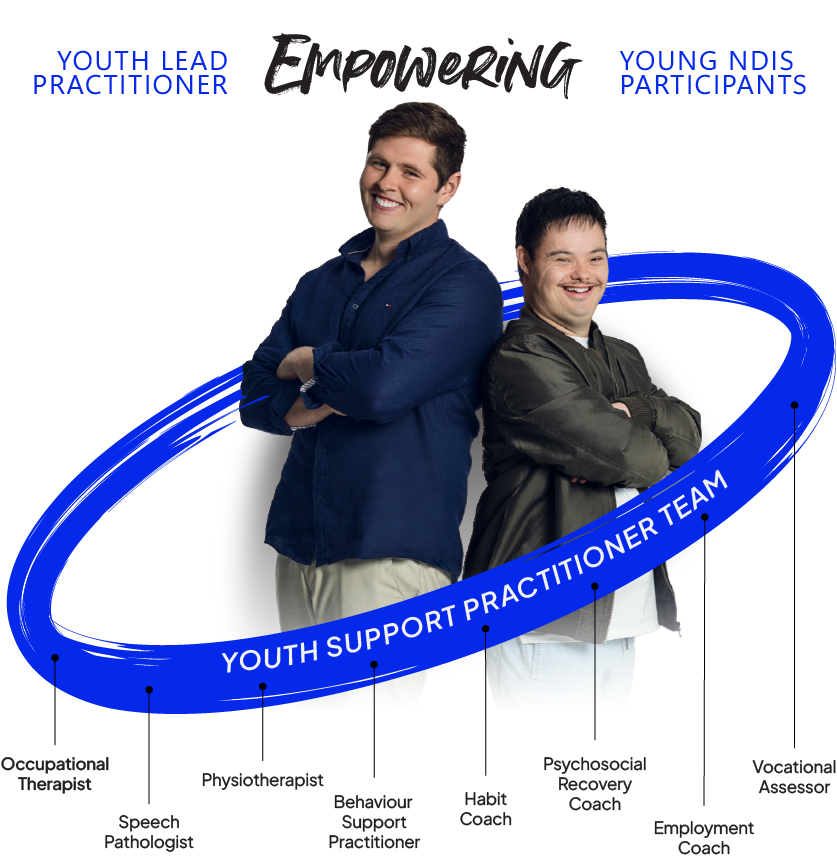
Your goals can change as you move through different stages of life. Led by your youth lead practitioner, your youth team evolves with you, bringing together the right therapies and employment supports for what matters to you now and what comes next.

EARLY ADOLESCENCE (9-13)

Becoming yourself

  • Exploring interests and hobbies
  • Making positive friendships
  • Strengthening self-expression.

LATER ADOLESCENCE (14-18)

Becoming independent

  • Keeping physically and mentally healthy
  • Navigating educational and vocational choices
  • Building self-confidence and resilience.

EARLY ADULTHOOD (19-25)

Making your own way

  • Living independently
  • Accessing vocational training
  • Getting job ready
  • Managing finances and employment.

Not sure which support is right for you?

Talk to our team about your goals and the supports available.

Who is a youth lead practitioner?

A youth lead practitioner is a qualified professional who leads and coordinates support for young people aged 9–25.  They are typically degree-qualified in social work, youth work, education, developmental education, or mental health nursing and have experience supporting young people.

They:

  • Get to know you and act as your key point of support
  • Deliver services to build your skills
  • Coordinate your therapy and employment support team
  • Bring together allied health and other professionals
  • Keep everyone focused on shared goals
  • Support skill-building, confidence, and independence across home, school, work, and community

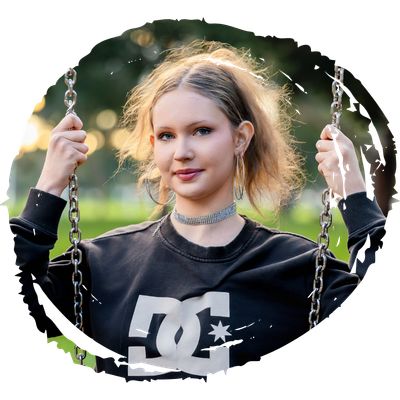
My goals were to start leaving the house and start living. I wasn’t enjoying my youth and I really wanted to enjoy it.

I think what helped was that I felt comfortable, I wasn’t rushed into anything that I didn’t want to do. I was able to take my time and communicate what I was comfortable with doing.

Now I’m making a lot more memories, seeing a lot more people and just enjoying my life more.

– Iris, Youth Supports Participant

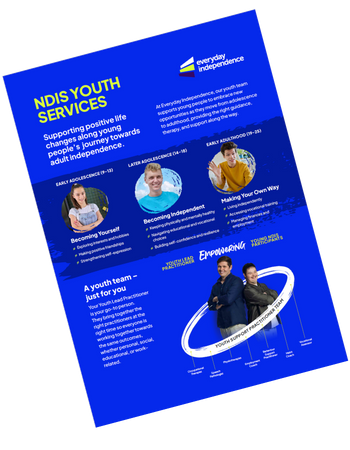
NDIS youth services flyer

Download to learn more.

Youth Services Flyer
PDF 729.5kb

Common questions

At what age can I access youth services?

Our youth services are available to NDIS participants aged 9-25 years. However Everyday Independence can support NDIS participants aged up to 65 years with any of their goals.


What types of services do you offer to adolesents and young adults?

We provide a comprehensive range of youth-focused services designed to support adolescents and young adults as they explore career opportunities, develop valuable skills, and confidently plan for their future. Our integrated approach combines employment and vocational programs with therapeutic support.

A youth lead practitioner is your main therapist and day to day contact, coordinating the wider team of allied health and other youth-focused practitioners and coaches. They:

  • Develop therapy plan targeting NDIS goals
  • Collaborate with schools, employers, stakeholders
  • Connect you to community programs and supports
  • Track and report progress on NDIS and life goals

This service can be complemented by our employment and vocational programs including:

  1. Employment Support Funding: Assistance in accessing funding to support employment goals.
  2. Vocational Assessments: Professional evaluation to help identify strengths, interests, and suitable career paths.
  3. Youth Employment Program: Tailored programs to guide youth aged 15-22 through work or job exploration and skill-building activities.
  4. Psychosocial Recovery Coaching: Support and coaching to build resilience and confidence in the workplace.

In addition to these programs, we also offer NDIS Therapy Services such as occupational therapy, speech and physiotherapy, positive behaviour support and habit coaching to further enhance personal growth and wellbeing.

What funding is required to access youth services?

To access employment and vocational services you will need NDIS Capacity Building – Finding and Keeping a Job funding. Our therapists can support you to access this funding if employment is one of your goals.

To access NDIS Therapy Services, Capacity Building Supports, including Improved Daily Living funding (therapy) or Behaviour Support (Improved Relationships) funding is required.

Our therapists can support you to access any of this funding if employment is one of your goals.

Who are Youth Lead Practitioners?

Our youth lead practitioners are skilled in supporting adolescents and young adults aged 9–25 as they navigate life with a disability.

They are degree-qualified social workers, specialist educators, youth workers, developmental educators, or mental health nurses.

Become part of the Everyday Independence community by joining our monthly newsletter to learn about latest news and events across Australia.