Skip to Content

School Leaver Employment Supports (SLES): What The NDIS May Fund When School Ends

Leaving school is a big transition, especially if you’re still working out what kind of job might suit you and what support you may need to get there.

School Leaver Employment Supports, commonly known as SLES, can help young NDIS participants build the skills and confidence they need to move from school towards employment.

SLES are individualised to each person’s unique goals, strengths and disability-related support needs. That could mean exploring different types of work, building practical workplace skills, gaining real-world experience or becoming more confident and independent as you prepare for employment.

Here we explain SLES, what can be funded and what can’t, how long support may be available, and break down how to get SLES funding on an NDIS plan.


Teenage boy working in clothing store

What are school leaver employment supports (SLES)?

School Leaver Employment Supports are NDIS-funded capacity-building supports that may help young people with disability prepare for employment as they transition from school into adult life.

Employment support for young NDIS participants is available to working-age participants with an employment goal, with young participants generally referring to people aged 15 to 24. Support may help young people gain additional work experience, transition from school to employment, build work skills or prepare for further education or training [1].

SLES should be individualised. This means the activities and skills being worked on should reflect the person’s interests, abilities, employment goals and barriers rather than following the same timetable for every participant.

You also don’t need to have a particular career figured out before getting started. Exploring your strengths, interests and the types of work that might suit you can be an important part of preparing for employment.

Who may be eligible for SLES?

SLES may be suitable for young NDIS participants who are preparing to leave school, or who have recently left school, and need disability-related support to build the skills required for employment.

A young person may be considered for SLES if they:

  • are an NDIS participant
  • have an employment goal in their NDIS plan
  • are transitioning from school towards work
  • need additional support to develop work readiness, confidence or independence
  • have disability-related barriers that make it harder to move directly into employment or use mainstream employment services without additional support.

Adult and teenage boy working in factory

SLES is not automatically included in every school leaver’s NDIS plan. The NDIA will consider the participant’s individual goals, functional needs, existing supports and evidence when deciding whether employment support is reasonable and necessary.

Every young person’s pathway into work will look different. Some may be ready to gain work experience, while others may want more time to explore their interests or build the everyday skills they will need for employment.

What can SLES funding help with?

The activities included in SLES should have a clear connection to employment.

Depending on the participant’s needs and goals, employment supports may focus on areas such as:

  1. Workplace skills: Following instructions, teamwork, staying on task, managing time and problem-solving
  2. Communication: Asking questions, communicating with colleagues, self-advocacy, and understanding workplace expectations
  3. Work experience: Exploring different roles and building skills in real workplace environments
  4. Job preparation: preparing applications, practising interviews and understanding recruitment processes
  5. Travel and organisation: Learning how to travel to work, follow a schedule and organise work routines
  6. Workplace independence: Developing strategies to complete tasks with greater confidence and independence.

The right mix of support will depend on the young person. For someone still exploring what they enjoy, this could mean trying different types of work. For someone with a clearer employment goal, support may focus on building the specific skills and experience they need to take their next step.

These activities should support an employment outcome. For example, learning to use public transport to travel independently to a workplace has a clear employment connection. General community participation without an employment-related goal may fall under a different type of support.

What does SLES not fund?

The NDIS does not take over responsibilities that belong to other systems, such as schools, universities, TAFEs, training organisations or employers.

Depending on the situation, this means SLES would not generally be used to pay for things such as:

  • ordinary school, university or TAFE course fees
  • wages
  • standard workplace induction and supervision provided to all employees
  • ordinary workplace equipment
  • everyday living expenses such as meals or clothing
  • activities that do not have a clear connection to an employment goal.

There can be overlap between different systems, so it is important to identify whether a support is required specifically because of the person’s disability and which organisation is responsible for providing it.

How do you get SLES in an NDIS plan?

There is no single application that guarantees SLES funding. Instead, employment support should form part of the participant’s broader NDIS planning and employment goals.

Start with a clear employment goal

A clear goal makes it easier to identify which supports may be needed.

Examples could include:

  • building communication and confidence for customer-facing work
  • learning to travel independently to a workplace
  • exploring suitable hospitality, retail or administration roles
  • developing the skills needed to follow workplace routines
  • gaining experience in different workplaces to understand what type of work is a good fit.

The goal does not necessarily need to identify one exact future career. For a young person leaving school, exploring different employment possibilities may be an important part of the process.

Try to think about the next step towards work, rather than feeling like you need to choose one career now. Your goal could focus on exploring work options, building employment skills or becoming more confident and independent as you prepare for work.

Gather evidence about support needs

Useful evidence may include:

  • school transition plans
  • information from previous work experience
  • feedback from teachers or support staff
  • occupational therapy or other allied health reports
  • functional observations
  • examples of barriers experienced during work or community activities
  • information about the young person’s strengths and employment interests

Evidence is most useful when it explains the relationship between the person’s disability, the challenges they experience and the support they require to participate in employment.

Explain why disability-specific support is needed

Rather than simply requesting “SLES funding”, consider what skills or barriers actually need to be addressed.

For example, a young person may need support to learn a public transport route because their disability affects their ability to plan and navigate unfamiliar journeys. Another participant may need to develop communication strategies for asking for clarification when they do not understand workplace instructions.

Connecting support needs to real employment situations can make the purpose of the support much clearer.

When should you start planning for employment after school?

Employment planning does not need to wait until the final weeks of Year 12.

The NDIS encourages young people to think about employment and study goals as they approach their final year of schooling.

Earlier planning creates opportunities to:

  • explore strengths and employment interests
  • participate in meaningful work experience
  • identify environments where the young person works well
  • develop communication and self-advocacy skills
  • practise travelling independently
  • identify possible workplace adjustments
  • understand what support may be required after school.

What this looks like will be different for everyone. Planning early gives you more time to learn what you enjoy, what you are good at and what support could help you move towards employment.

How long does SLES last?

How long you receive employment support depends on your goals, support needs and progress. Your provider should regularly review your progress with you and explain what support you may need next. At Everyday Independence, our youth employment program typically runs for one to two years.

How long a person needs employment support will depend on their individual goals, circumstances and progress.

Participants may be ready to transition earlier into paid employment, further education, another employment service, or a different type of support at different stages.

The aim is not to remain on SLES for a particular length of time; it is to build the skills, experience and confidence needed to move towards the person’s employment goals.

Progress will look different for everyone. It might mean becoming more confident travelling to work, communicating with colleagues, completing workplace tasks, discovering the type of work you enjoy or taking your first steps into paid employment.

SLES vs. DES: what has changed?

People searching for employment support may still come across the term Disability Employment Services, or DES.

DES was replaced by Inclusive Employment Australia on 1 November 2025 [2]. Inclusive Employment Australia is an Australian Government employment program designed to support people with disability, injury or a health condition to prepare for, find and maintain employment.

SLES and Inclusive Employment Australia have different roles:

SLESInclusive Employment Australia (formerly DES)
Support may be funded through an NDIS planAustralian Government employment service
Focuses on building employment capacitySupports people to prepare for, find and maintain employment
May form part of the transition from school to workSupports eligible people to prepare for, find and keep employment
Support is linked to disability-related NDIS goals and needsEligibility and servicing is determined through employment services system

Which pathway is appropriate will depend on the young person’s circumstances, employment readiness and support needs.

How Everyday Independence supports the transition from school to work

Preparing to work is about more than learning how to write a resume. It’s also about understanding your strengths, exploring the types of work that interest you and building real-world skills and experience.

It can also mean exploring what you’re good at, finding the types of work that interest you and building the skills and experience to take your next step. At Everyday Independence, support can include our youth employment program, vocational assessments and therapy alongside employment support, depending on your goals.

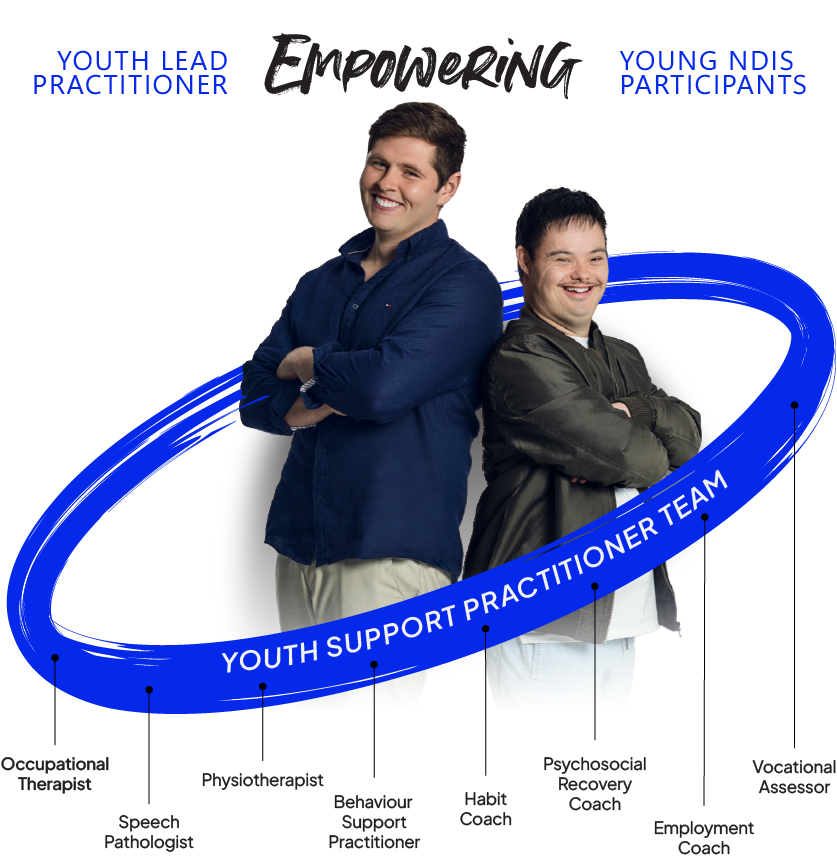
Employment coach

Employment coaches can support you to prepare for interviews, explore paid work opportunities and gain experience through work placements or volunteering linked to your employment goals. The focus is on building your skills, confidence and independence as you move towards meaningful paid employment.

Vocational assessor

Not sure what kind of work might suit the young person? A vocational assessment can help them understand their strengths, interests, skills and possible career options. Our vocational assessments can give provide insights into the supports and strategies that can help them succeed to help you at work and guide your next steps.

Youth lead practitioner

If the young person chooses therapy alongside employment support, a youth lead practitioner can be their main point of contact. They work alongside you to develop and deliver support around your goals, bring together the right therapists and practitioners, and review your progress with you.

Supporting young people to prepare for work

Not sure what kind of work might suit you yet? That’s okay.

Our youth employment program helps you explore your strengths and interests, build real-world skills and gain meaningful work experience as you move towards employment.

A vocational assessment can be a helpful place to start. It explores your strengths, interests and abilities to help you understand the types of work that may suit you and gives you a clearer direction for the next steps in your everyday life. From there, your employment coach can support you to build practical skills, explore work opportunities and gain experience in real workplaces.

You can also choose to receive therapy alongside the youth employment program, depending on your goals and the funding available in your NDIS plan. If you do, our youth team can work with you on your work and everyday-life goals, with support guided by a youth lead practitioner. This means your employment and therapy supports can work together towards what’s important to you.

If you are preparing for the transition from school to work, complete an online enquiry and our team will be in touch.

Common questions about SLES

Do you have to be in year 12 to access SLES?

Not necessarily. Current NDIS employment guidance refers more broadly to young participants aged 14 to 24 and recognises that employment preparation may begin while someone is still at school. Whether particular supports are appropriate will depend on the participant’s circumstances and NDIS plan.

Does SLES guarantee you a job?

No. SLES is intended to help build employment capacity, skills and experience. While the goal may be to move towards paid work, receiving employment support does not guarantee a particular job or employment outcome.

It can, however, give a young person opportunities to explore work, practise skills, gain experience and become more confident as they move towards employment.

Can SLES help with TAFE or university?

Employment support may sometimes help a participant build the disability-related skills they need to transition into further education or training. However, the NDIS does not replace supports that a TAFE, university or other education provider is responsible for providing.

Can you change SLES providers?

NDIS participants have choice and control over the providers they use, subject to their plan and funding arrangements. Before changing providers, it can be helpful to review the existing service agreement, including cancellation conditions, and consider how support will continue during the transition.

References

[1] NDIS, 2026. Guide to Employment. https://www.ndis.gov.au/participants/life-transitions/employment-support/guide-employment-support-young-participants?utm_source=chatgpt.com

[2] Services Australia, 2026. Inclusive Employment Australia. https://www.servicesaustralia.gov.au/inclusive-employment-australia?context=22276

What’s our current availability?

View all our teams’ availability here.
Check Availability

Ready to Refer?

Get your participants started on their journey, make a referral now.
Refer Now

Become part of the Everyday Independence community by joining our monthly newsletter to learn about latest news and events across Australia.