NDIS registered provider | Morning and afternoon appointments available in many locations | Therapy at home, school, work and in your community
Is positive behaviour support right for you?
You may be looking for support because everyday situations have become difficult, someone is experiencing distress, or behaviours are affecting safety and participation.
Positive behaviour support starts with understanding the person: what matters to them, how they communicate and what might be contributing to their behaviour.Together, we explore ways to:
Recognise and respond to the person’s needs.
Make routines and environments more supportive.
Build skills to communicate needs and manage difficult situations.
Help family members, carers and support workers respond consistently.
Support safer, more enjoyable participation in everyday life.
The focus is on improving quality of life while respecting the person’s rights, choices and dignity.
Using your NDIS funding
You’ll need an approved NDIS plan with funding allocated for behaviour support. This may appear as Behaviour Supports or within Improved Relationships, depending on your plan.
Not sure whether you have the right funding? Contact us to discuss your plan and the support you’re looking for.
Positive behaviour support for children, teenagers and adults
Support for children
When a child is distressed or finding everyday situations difficult, understanding what they need can help everyone feel more confident about how to respond.
We work with your child, your family and the people involved in their day to explore what is happening and develop practical strategies.
Support may include:
Helping your child communicate their needs.
Recognising signs of distress and supporting emotional regulation.
Making play, transitions and family routines more manageable.
Supporting participation at home, childcare and school.
For children under nine, support includes a dedicated Key Worker.
Tell us who the support is for, your location and what you would like help with. Our team will discuss local availability, funding and next steps.
2. Understand what’s happening
Your behaviour support practitioner gets to know you and, with your involvement, gathers information from the people who know you well. They explore when behaviours occur, what may contribute to them and what support could help.
3. Develop a practical plan
Your practitioner uses the assessment to develop strategies tailored to your needs. These may involve changes to your environment, new skills and guidance for the people supporting you.
4. Put strategies into everyday practice
We help you and your support network understand and use the strategies, then review how they are working and adjust them as your needs change.
Strategies need to work in the places and situations where you use them.
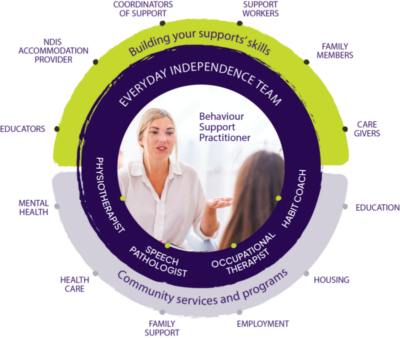
Our behaviour support practitioners come to you and work with the people involved in your day. With your consent, they can also coordinate with other therapists and services so your support works together.
One team supporting your goals
Your behaviour support practitioner works with you and the people involved in your everyday life. If you would benefit from another type of support, we can bring in other Everyday Independence therapists and practitioners.
Working with you in everyday settings helps us develop strategies that fit your routines and the things that matter to you and helps get the best outcomes from your NDIS funding.
It feels like we’ve known our therapy team for years. Scarlett has been amazing with Amy and has come up with so many practical ideas. We’ve tried other providers before, but this support has been exactly what we needed.
Positive behaviour support frequently asked questions
What funding is needed to access behaviour support services?
You’ll need an approved NDIS plan with Improved Relationships or Behaviour Supports funding. People with Improved Daily Living funding can access our Improved Daily Living Programs. These programs help reduce challenging behaviours and develop healthier habits.
What is a behaviour support plan?
A Behaviour Support Plan sets out what has been learned about a person’s needs and behaviours of concern, along with practical strategies for the people supporting them. It aims to make support safer, more consistent and better suited to the person’s everyday life.
Where restrictive practices are in place, our Behaviour Support Practitioners will develop an Interim Behaviour Support Plan within 30 days of assessment. This plan outlines immediate strategies and environmental changes to support safety, consistency and positive outcomes.
Within six months, a Comprehensive Behaviour Support Plan is developed based on further assessment, observation and the strategies that have been trialed. This plan provides a deeper understanding of the person’s strengths, needs and goals, and outlines long-term strategies to support positive change.
Where required, plans that include restrictive practices are submitted to the relevant state or territory authorising body and the NDIS Commission in line with legislative requirements.
Our goal is to ensure everyone understands the plan and can confidently use it in everyday life.
Challenging behaviours, also known as behaviours of concern, are defined as behaviours that:
Put you or others at risk of harm (physical, emotional or psychological)
Limits your access to community activities, education, and support services
Or significantly impacts your quality of life in various ways.
For example, you might find it hard to control your reactions, present aggression and socially disruptive behaviour (e.g. screaming, verbal aggressions, physical aggression), run away, cause property damage or not be able to follow routines. These behaviours can stop you from learning new things, connecting with others or enjoying your day-to-day living.
Who are Everyday Independence Behaviour Support Practitioners?
Our Behaviour Support Practitioners work alongside children, teenagers and adults to understand what’s driving behaviours of concern and develop practical strategies that support positive change.
They come from a range of professional backgrounds, including mental health, social work, developmental education, psychology, speech pathology, occupational therapy and more. This means we can match you with a practitioner who understands your unique needs and goals.
They work closely with the person, their family, carers and support network to build skills, increase participation and improve quality of life.
At Everyday Independence, our Behaviour Support Practitioners receive ongoing training and professional development to ensure they deliver evidence-based, person-centred support that reflects current best practice.
What are restrictive practices?
A restrictive practice limits a person’s rights or freedom of movement. People typically use them in response to challenging behaviours, and they should always be a last resort. There are five types of regulated restrictive practices, these include chemical, physical, environmental, and mechanical restraints, and seclusion.
Our behaviour support practitioners work hard to reduce or eliminate restrictive practices. They aim to restore the person’s dignity and independence. their goal is to improve the person’s quality of life.
Under the NDIS, some restrictive practices are regulated. They must be authorised by the respective States or Territory, with monitoring and reporting to the NDIS Commission of Quality and Safeguards.
Do Behaviour Support Practitioners write Outcome Reports?
Yes, we report on the outcomes the participant has achieved with the funding utilised, including any barriers and outlining what’s needed in the next NDIS plan to achieve their desired outcomes.
What NDIS therapy services does Everyday Independence provide?
Everyday Independence offers a full range of therapy supports to meet your needs, including:
Occupational therapy – enhance everyday life skills and participate fully in activities that matter most to you
Speech pathology – improve communication, speech, swallowing challenges for greater confidence and ease
Physiotherapy – therapy support for movement, connection, and participate in the activities you love.
Early childhood supports- helping children with disabilities and developmental delay to develop skills and make positive life changes.
Positive behaviour support – reduce behaviours of concern and achieve a better quality of life.
Youth Lead Practitioners – supporting young people aged 9-25 yeras to navigate key life transitions and work towards independence
Habit coaching – practice routines and skills in between therapy sessions to build confidence and achieve goals
Employment coaches – helping young people build skills to get job ready.
Whether you’re just starting out with the NDIS or looking to make the most of your current plan, we’re here to support you every step of the way.
Are you recruiting Behaviour Support Practitioners?
Everyday Independence is always looking for practitioners who are curious about behaviours and understanding why people use challenging behaviours. We’re currently recruiting occupational therapists, speech pathologists, mental health nurses, developmental educators, psychologists, and social workers to support people with disabilities to live a much better life.