
Skip to Content

How Do I Find Paediatric Occupational Therapy Near Me?

If you’re looking for paediatric occupational therapy near you, choose a provider that understands your child’s strengths, goals and support needs. Ask where therapy is delivered, how families are involved, whether NDIS funding is accepted and how therapists work together to support your child.
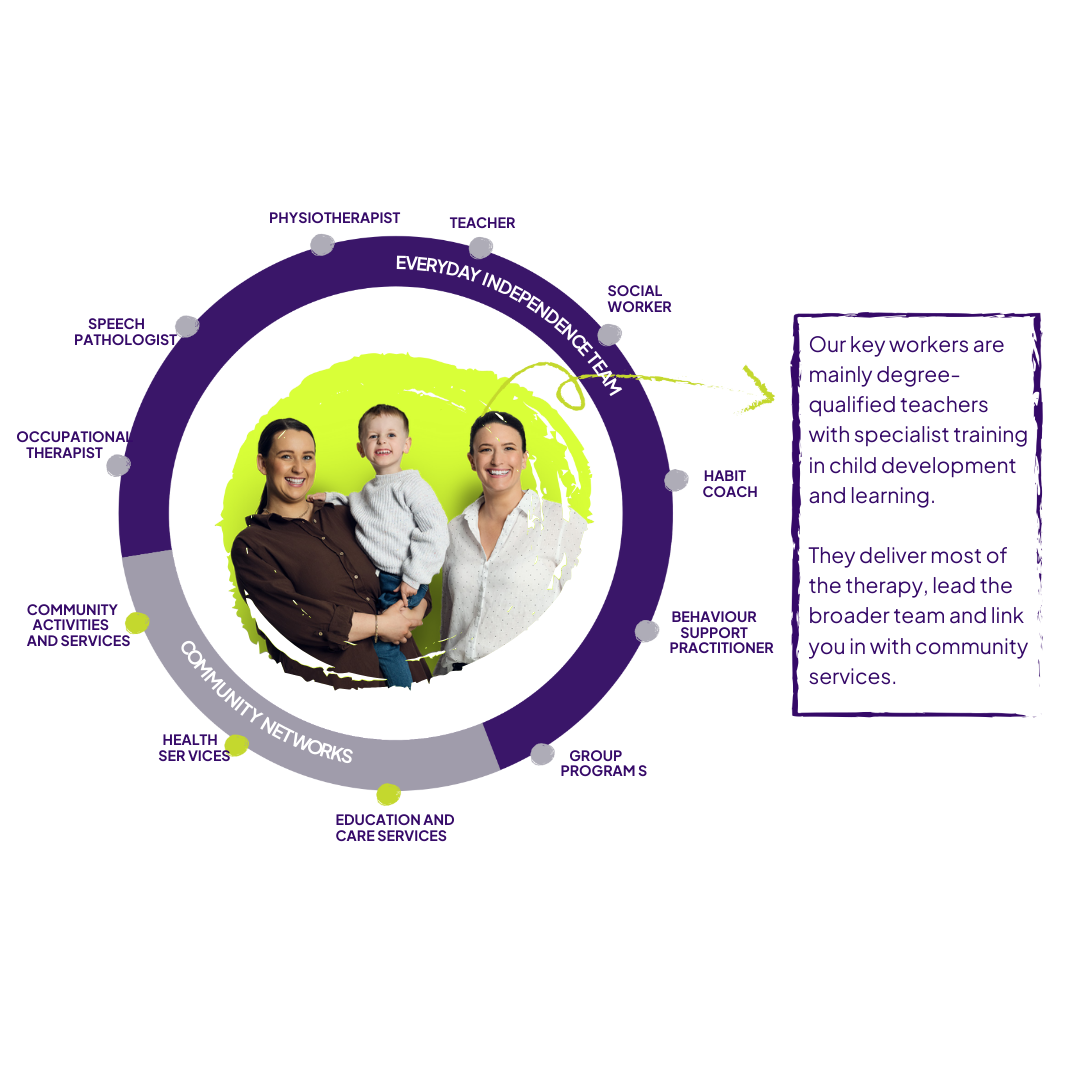
For children under nine with developmental delay or disability, support is often delivered through a key worker approach. Rather than seeing multiple therapists separately, your family is matched with one dedicated key worker who gets to know your child and family well. They deliver most of your child’s support while working closely with occupational therapists, speech pathologists, physiotherapists and other practitioners when needed.

If you’re searching for paediatric occupational therapy for a child with disability, you’re likely looking for support that helps your child build skills, participate more fully in everyday life and work towards what’s important to them.

With so many providers available, it can be difficult to know where to start. Asking the right questions can help you find an occupational therapist who understands your child’s unique strengths and support needs, works alongside your family and delivers support that makes a meaningful difference in everyday life.


A smiling woman and young girl reading a book together indoors, sharing a joyful moment.

At Everyday Independence, we provide NDIS-funded support for children with disability through our early childhood supports and therapy services. Whether your child works directly with an occupational therapist or is supported through a key worker model, or by a youth lead practitioner, our focus is helping them build skills, confidence and independence in the environments where they live, learn and play.

What Does a Paediatric Occupational Therapist Do?

Paediatric occupational therapists have skills or an interest in supporting infants, children and teenagers to build the skills, confidence and independence they need to participate in everyday life. They work alongside children and families to support participation at home, childcare, kindergarten, school and in the community.

This might include support with:

  • Play and learning
  • Emotional regulation
  • Fine motor skills such as drawing, cutting and handwriting
  • Gross motor skills and coordination
  • Sensory processing
  • Independence with dressing, toileting and mealtimes
  • School readiness and classroom participation
  • Building confidence, social connection and independence

Signs Your Child May Benefit from Occupational Therapy

Every child develops differently. Occupational therapy may help if your child needs support to participate in everyday activities at home, childcare, school or in the community. This may include support with:

  • Following routines and daily activities
  • Managing emotions and coping with change
  • Fine motor skills such as using scissors, pencils or cutlery
  • Coordination, balance or physical confidence
  • Dressing, eating or personal care tasks
  • Sensory sensitivities
  • Play, learning and social participation
  • Participating in childcare, kindergarten, school or community activities

If you’re unsure whether occupational therapy is right for your child, an occupational therapist can help you understand your options and identify supports that align with your child’s strengths and goals.

How Occupational Therapy Works at Everyday Independence

For children aged 0–8, Everyday Independence uses a key worker approach. Rather than coordinating appointments with multiple therapists, you’ll have one dedicated therapist who gets to know your child and family well.

Your key worker delivers most of your child’s support and brings in other therapists, such as speech pathologists, physiotherapists and behaviour support practitioners, when needed.

This means:

  • One main point of contact
  • Less time managing appointments
  • Consistent support for your child and family
  • Therapy that fits into everyday life
  • A whole team of therapists working together around your goals

Occupational therapy isn’t about changing who your child is. It’s about helping them participate more fully in the activities, relationships and experiences that are important to them and your family.

Children aged between 9 and 26 have the option of working with a youth lead practitioner, who works much like a key worker. The youth lead practitioner has expertise in working with young people. They will work with an occupational therapist to implement occupational therapy strategies to help you achieve your goal.

Do I need an Occupational Therapist or a Key Worker?

For children aged 0–8 with developmental delay or disability, support is often delivered through a key worker model. Your early childhood key worker provides most of your child’s support and works closely with occupational therapists, speech pathologists, physiotherapists, behaviour support practitioners and other therapists as needed. This means your child benefits from the expertise of an entire therapy team while having one dedicated person who gets to know your child, your family and your goals. Together, they help build your child’s skills, confidence and participation in everyday life.

What are the Benefits of the Key Worker Approach?

  • One main point of contact who knows your child and family
  • Less time managing appointments
  • Consistent support for your child and family
  • Access to one main practitioner and a team of therapists when more support is needed
  • Therapy that fits into everyday life
  • A whole team of therapists working together around your goals

How Do I Choose the Right Occupational Therapist?


Finding the right therapist is about more than finding someone nearby. Look for a therapist who:

  • Takes the time to understand your child and family
  • Focuses on your child’s strengths and goals
  • Works in partnership with parents and carers
  • Delivers evidence-informed support
  • Provides therapy in environments where your child naturally spends their time
  • Has access to a team of therapists when additional expertise is needed.

At Everyday Independence, we work alongside parents and carers, providing practical coaching, strategies and support that fit naturally into your family’s routines. Whether your child is working with a key worker, occupational therapist or therapy team, you’ll be supported to help your child learn and grow between appointments and in the moments that matter most.

Questions to Ask Before Starting Occupational Therapy

Before choosing a provider, consider asking the following questions:

Where will therapy take place?

Children often learn best in the places where they spend their time. Ask whether therapy can be delivered at home, childcare, kindergarten, school or in the community.

How will you involve parents and carers?

Parents and carers are an important part of a child’s support team. Ask how the therapist will share strategies and help you build confidence supporting your child’s development.

How do you set goals?

A good therapist should work with your family to identify goals that are meaningful and relevant to everyday life.

How will progress be measured?

Ask how goals are reviewed and how progress is tracked over time.

What happens if my child needs support from other therapists?

Many children benefit from support from more than one therapist. Ask how the provider works alongside speech pathologists, physiotherapists and other professionals when required.

Clinic-Based Therapy vs Community-Based Therapy

Many occupational therapy providers deliver sessions in a clinic setting. While this works well for some families, it can be difficult for children to transfer new skills into everyday life. At Everyday Independence, we deliver occupational therapy where life happens — at home, childcare, kindergarten, school and in the community.

This allows us to support children in real-life situations and help them practise skills where they are needed most. It also helps parents, carers and educators learn practical strategies they can use every day.

What Happens at the First Occupational Therapy Appointment?

At Everyday Independence, your first appointment is about getting to know your child, your family and what’s important to you.

Depending on your child’s age, goals and support needs, your first appointment may be with an occupational therapist, key worker or youth lead practitioner. This helps ensure your family is connected with the right support from the beginning, while still having access to occupational therapy and other services when needed. For children aged 0–8, this is often a key worker who delivers most of your child’s support and brings in occupational therapists and other therapists when needed.

During the appointment, we’ll spend time understanding:

  • Your child’s strengths, interests and personality
  • What’s working well right now
  • Any challenges your child is experiencing
  • Your family’s goals and priorities
  • The environments where your child spends their time, such as home, childcare, kindergarten, school and the community

Together, we’ll identify meaningful goals and create a plan that supports your child’s participation, independence and development in everyday life.

If occupational therapy is the right support for your child, your key worker can work closely with an occupational therapist and other members of your therapy team to ensure your child receives the support they need.

How Does NDIS Funding Work for Occupational Therapy?

Occupational therapy may be funded through the NDIS if it is considered reasonable and necessary to help your child work towards their goals.

Depending on your child’s age and circumstances, support may be funded through Early Childhood Supports or through a child’s NDIS plan, typically under Capacity Building funding.

For children aged 0–8, occupational therapy is often delivered as part of a broader Early Childhood Supports approach. This may include a key worker who provides most of your child’s support while working closely with occupational therapists, speech pathologists, physiotherapists and other therapists as needed.

Every child’s situation is different, and the type of funding available will depend on your child’s age, eligibility and individual goals.

If you’re unsure whether your child is eligible for NDIS funding or has the right supports in place, our team can help you understand your options and navigate the process.

Is Occupational Therapy for Children Funded by the NDIS?

Yes. Occupational therapy may be funded by the NDIS when it helps a child build skills, increase independence and work towards their goals. Funding is often used for assessment, therapy, skill development, assistive technology recommendations and support to participate more fully in everyday life.

How Does Occupational Therapy Work Through Early Childhood Supports?

For children aged 0–8 with developmental delay or disability, occupational therapy is often delivered through a key worker approach. Your family is matched with a dedicated early childhood key worker who gets to know your child and family well and delivers most of your child’s support.

Your key worker works closely with occupational therapists, speech pathologists, physiotherapists and other practitioners as needed. This means your child benefits from the expertise of a whole therapy team while having one main person supporting your family.

Do I need an Occupational Therapist or a Key Worker?

For children aged 0–8 with developmental delay or disability, support is often delivered through a key worker model. Your key worker provides most of your child’s support and works closely with occupational therapists, speech pathologists, physiotherapists and other therapists as needed. This means your child benefits from a whole team of expertise while having one main person supporting your family.

Looking for Paediatric Occupational Therapy Near You?

At Everyday Independence, our occupational therapists, key workers and youth lead practitioners deliver occupational therapy to children and families across Australia to build confidence, independence and participation in everyday life.

We support children at home, childcare, kindergarten, school and in the community, helping them develop the skills they need to thrive where life happens.

If you’re looking for paediatric occupational therapy and aren’t sure where to start, our team can help you understand your options and find the right support for your child. Complete an online form and our team will be in touch.

Sign up to our newsletter

Become part of the Everyday Independence community by joining our monthly newsletter to learn about latest news and events across Australia.