We provide NDIS-funded positive behaviour support in Melbourne to help children, teenagers and adults understand what is causing behaviours, build practical skills to reduce behaviours of concern, and improve their quality of life.
Our behaviour support practitioners work with you in your home, school, work and community, so support feels real, practical and part of everyday life.
How our Melbourne NDIS Positive Behaviour Support delivers more
By building skills, strengthening communication, and creating supportive routines, we help reduce behaviours of concern. We work closely with your wider support network, your family, educators, and other therapists, so everyone feels confident, consistent, and supported in helping you move towards the life you want.
Our Melbourne team brings together experience across social work, occupational therapy, mental health, and developmental education, giving us a well-rounded understanding of behaviour and the many factors that influence it.
Positive Behaviour Support (PBS) is an evidence-based approach that helps understand the reasons behind behaviours of concern and develop practical strategies to improve quality of life.
It focuses on:
Increasing independence and choice
Reducing behaviours of concern
Improving communication and daily functioning
Reducing or eliminating restrictive practices
Supporting participation in home, school, work and community life
PBS is commonly funded under the NDIS for people with disability who need structured behaviour support.
Positive Behaviour Support for every stage of life
Our Melbourne-based positive behaviour support practitioners help children, teenagers and adults with disability to understand what is causing their behaviours, build skills and create meaningful, lasting change.
Behaviour Support for children
We support children to better understand their behaviours and build the foundations for communication, emotional regulation and positive experiences.
This may include:
Understanding the triggers and reasons behind behaviours of concern
Supporting emotional regulation and early communication skills
Providing practical behaviour support strategies for families and carers
Building consistent routines and positive daily experiences
Reducing or eliminating restrictive practices to improve participation at home, school and in the community
We work closely with families and support networks so everyone feels confident and aligned in how to support the child.
Behaviour Support for teenagers
Adolescence is a time of increasing independence, new expectations and life transitions. We support teenagers to build the skills and confidence they need for everyday life.
This may include:
Building independence with daily routines and organisation
Developing social skills and confidence in community settings
Supporting emotional regulation and self-awareness
Building skills for school participation and transitions
Preparing for employment, further education or training
Supporting families and schools with practical, consistent strategies
Where needed, we also support key transitions by helping young people move toward greater independence and future pathways.
Behaviour Support for adults
For adults, positive behaviour support focuses on increasing independence, choice and quality of life.
This may include:
Understanding and reducing behaviours of concern
Implementing practical, personalised behaviour support strategies
Reducing restrictive practices and increasing access to the community
Supporting daily routines that promote wellbeing and independence
Building the capability of support teams to provide consistent, effective support
We focus on what matters most to you. Supporting greater control, participation and meaningful engagement in everyday life.
Understanding NDIS Behaviour Support Plans
As part of your NDIS behaviour support, we develop structured plans that guide your support team and create clear, consistent strategies. This includes:
An Interim Behaviour Support Plan (within 30 days) focused on safety, immediate needs and reducing restrictive practices
A Comprehensive Behaviour Support Plan (within 6 months) developed with you and your support network
These plans:
Identify the underlying causes of behaviours
Provide practical, evidence-based strategies
Align everyone involved in your support
Create more opportunities for positive experiences in everyday life
Why choose us for NDIS Positive Behaviour Support in Melbourne
In Melbourne’s west, we work in everyday community settings such as Highpoint Shopping Centre, local parks and public transport systems like Yarra Trams, helping build confidence and independence in real-world environments. We also support people across a range of settings, from Port Melbourne beaches to Botanical Gardens, where practicing skills in the moment supports communication and emotional regulation.
At Everyday Independence, we know every behaviour happens for a reason. If you or someone you care for is experiencing behaviours of concern, we’re here to help.
Our positive behaviour support practitioners work alongside you at home, school and in the community. Across Melbourne’s southeastern suburbs, from Doncaster and Hallam to Frankston to Rosebud, we focus on practical, real-life strategies that reduce behaviours of concern and safely minimise restrictive practices over time.
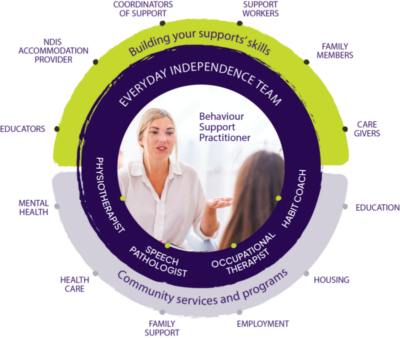
Our Melbourne behaviour support practitioners work with you in your community as part of a broader team, which may include speech pathologists, occupational therapists, physiotherapists and habit coaches.
This coordinated approach ensures everyone is working towards shared goals, helping you build skills and achieve what matters most to you.
What funding is needed for Positive Behaviour Support?
To access positive behaviour support services, you’ll need funding under Improved Relationships or Behaviour Support in your NDIS plan. This enables us to deliver evidence-informed specialist behaviour support focused on reducing behaviours of concern and restrictive practices, while promoting increased community participation.
If this funding isn’t currently in your plan, you may be eligible for our Improved Daily Living programs. These programs help reduce moderate behaviours and build healthy, sustainable habits in everyday life.
Not yet an NDIS participant? Visit our NDIS information pages to learn how to apply and get the right supports in place.
Find Melbourne Positive Behaviour Support near you
We provide NDIS Positive Behaviour Support for children, young people and adults living with disability across Melbourne and regional Victoria. Enter your postcode below to check whether we service your area or find your nearest therapy hub.
We provide therapy services and youth employment and vocational supports to people with disabilities living in metro areas of Northern Melbourne, Southern Melbourne, Eastern Melbourne, Western Melbourne and down to the Peninsula region.
NDIS Occupational Therapy Melbourne
NDIS Speech Pathology Melbourne
NDIS Physiotherapy Melbourne
NDIS Early Childhood Supports Melbourne
NDIS Habit Coaches Melbourne
NDIS Youth Employment and Vocational Services
Common questions about NDIS Positive Behaviour Support in Melbourne
What are challenging behaviours?
Challenging behaviours, also known as behaviours of concern, are defined as behaviours that:
Put you or others at risk of harm (physical, emotional or psychological)
Limits your access to community activities, education, and support services
Or significantly impacts your quality of life in various ways.
For example, you might find it hard to control your reactions, present aggression and socially disruptive behaviour (e.g. screaming, verbal aggressions, physical aggression), run away, cause property damage or not be able to follow routines. These behaviours can stop you from learning new things, connecting with others or enjoying your day-to-day living.
What funding is needed to access behaviour support services in Melbourne?
NDIS participants with Improved Relationships or Behaviour Supports funding in their NDIS plan can access this service. Children, teenagers and adults with disability in Melbourne with Improved Daily Living funding can access our Improved Daily Living Programs. These programs help reduce challenging behaviours and develop healthier habits.
What is a behaviour support plan?
A behaviour support plan includes strategies to understand behaviours, reduce restrictive practices and support consistent approaches across home, school and community.
A PBS plan will be developed (within 30 days of your assessment if unauthorised restrictive practices are used) to share, review, and regularly update with your support team. On occasions where a restrictive practice is in place, the plan will be sent to the relevant states and territories’ Office of the Senior Practitioner for authorization and the NDIS commission for monitoring the use of the restrictive practice.
We’ll help everyone involved understand the plan and how to use it in everyday life.
Who are Everyday Independence Behaviour Support Practitioners?
Our behaviour support practitioners are highly trained and experienced in supporting children, teenagers and adults who use behaviours of concern.
Our team brings diverse expertise across social work, occupational therapy, mental health, and developmental education. Carefully selected for their skills, values and approach, they provide compassionate, open-minded support grounded in evidence-based practice.
At Everyday Independence, our practitioners engage in ongoing training and professional development to deliver person-centred positive behaviour support.
What are restrictive practices?
A restrictive practice limits a person’s rights or freedom of movement. People typically use them in response to challenging behaviours, and they should always be a last resort. There are five types of regulated restrictive practices, these include chemical, physical, environmental, and mechanical restraints, and seclusion.
Our behaviour support practitioners work hard to reduce or eliminate restrictive practices. They aim to restore the person’s dignity and independence. their goal is to improve the person’s quality of life.
Under the NDIS, some restrictive practices are regulated. They must be authorised by the respective States or Territory, with monitoring and reporting to the NDIS Commission of Quality and Safeguards.
Where can I read more about restrictive practices?
What is the current waitlist for NDIS Positive Behaviour Support in Melbourne?
Everyday Independence prioritises immediate capacity across Melbourne. While many Melbourne providers have 6–12 month waitlists, our teams in Werribee, Derrimut, Keilor Park, Craigieburn, South Morang, Moorabbin, Burwood East, Croydon, Pakenham, Seaford, Hallam, Mornington and Warragul often have immediate availability.
Does your Melbourne PBS team cover the Western and Northern suburbs?
Yes. We provide full mobile coverage across Western Melbourne, including Footscray, Sunshine and Werribee, and Northern Melbourne, including Broadmeadows and Craigieburn. Our practitioners come to you—at home, school, or in the community—so support happens where it’s needed most. This helps us understand behaviour in context and deliver practical strategies that work in everyday life.
Can you develop an Interim Behaviour Support Plan within 30 days for Melbourne participants?
Yes. For participants in Melbourne, we prioritise Interim Behaviour Support Plans and aim to complete them within 30 days, especially where restrictive practices are involved. The plan focuses on immediate safety, reducing risk, and putting practical strategies in place quickly, so you have the right support while longer-term behaviour support strategies are developed.
What makes Everyday Independence different from other Melbourne PBS providers?
We come to you across Melbourne, instead of asking you to visit a clinic and we take a team approach to help you achieve your goals. Your team may include an Occupational Therapist, Speech Pathologist, and behaviour support practitioner working together.
We look at communication and sensory needs, not just behaviour. This helps us understand the cause and create simple strategies that work in your everyday life.
Can I access behaviour support in Melbourne if I only have ‘Improved Daily Living’ funding?
You need Improved Relationships or Behaviour Supports funding in your NDIS plan to access specialist positive behaviour support. We offer Improved Daily Living Programs which help people with moderate behaviours to bridge the gap while they are waiting for Improved Relationships or Behaviour Supports.
Are your Melbourne PBS practitioners experienced with neurodiversity-affirming care
Yes. Our team in Melbourne is committed to neurodiversity-affirming practice. We don’t try to “fix” the person. Instead, we focus on understanding communication and what someone needs to feel safe and supported.
We also work with you to adjust your home, school, or work environment to reduce stress and support your natural way of being.
Do you support children in Melbourne through the NDIS Early Childhood Approach (0-9)?
Yes. For families in Melbourne with children aged up to eight years, we use a key worker model. Your key worker will work closely with your behaviour support practitioner and other therapists on your team to work towards all your goals.
This helps build communication and everyday skills in the places your child spends their time, like your home or local kindergarten, so strategies are consistent and easy to use.
Do Behaviour Support Practitioners write Outcome Reports?
Yes, we report on the outcomes the participant has achieved with the funding utilised, including any barriers and outlining what’s needed in the next NDIS plan to achieve their desired outcomes.
What NDIS therapy services does Everyday Independence provide?
Everyday Independence offers a full range of therapy supports to meet your needs, including:
Occupational therapy – enhance everyday life skills and participate fully in activities that matter most to you
Speech pathology – improve communication, speech, swallowing challenges for greater confidence and ease
Physiotherapy – therapy support for movement, connection, and participate in the activities you love.
Early childhood supports- helping children with disabilities and developmental delay to develop skills and make positive life changes.
Positive behaviour support – reduce behaviours of concern and achieve a better quality of life.
Developmental education – navigate key life transitions with strategies designed to empower and support independence
Habit coaching – practice routines and skills in between therapy sessions to build confidence and achieve goals.
Whether you’re just starting out with the NDIS or looking to make the most of your current plan, we’re here to support you every step of the way.
Are you recruiting Positive Behaviour Support Practitioners?
Everyday Independence is always looking for practitioners who are curious about behaviours and understanding why people use challenging behaviours. We’re currently recruiting occupational therapists, speech pathologists, mental health nurses, developmental educators, psychologists, and social workers to support people with disabilities to live a much better life.