
Skip to Content

NDIS Early Childhood Intervention Services in Bankstown

Supporting children with disabilities and developmental delay to thrive in everyday life.

How Early Childhood Supports Deliver More

At Everyday Independence, our local team of key workers, therapists, and behaviour support practitioners in Bankstown work together to support your child and family. We deliver therapy in everyday settings, your home, daycare, school, or community – because that’s where real learning happens.

We offer NDIS early childhood supports (early childhood intervention services) in Bankstown for all children under nine years old.

Using the NDIA-preferred key worker model, our early childhood supports brings together:

  • Occupational therapy (paediatrics)
  • Speech pathology (paediatrics)
  • Physiotherapy
  • Positive behaviour support for children
  • Habit coaching

Your family is matched with a dedicated key worker, who gets to know your whole child, their strengths, challenges, and goals and delivers most of the therapy. When needed, they bring in therapists like speech pathologists, occupational therapists, or physios to provide extra support.
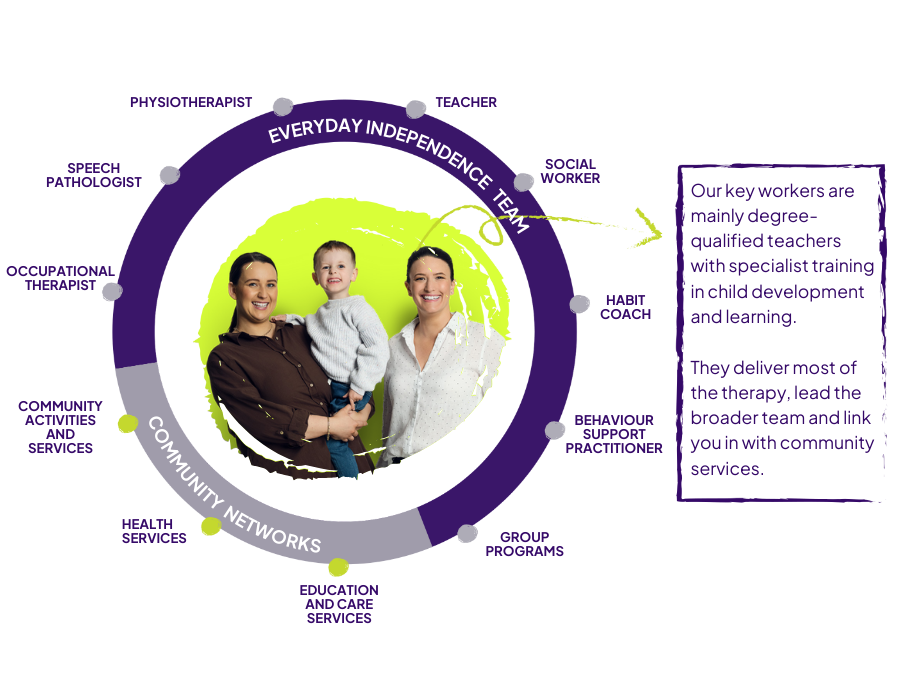

 

The Key Worker Model: Supporting Every Part of Your Child’s Development

Your Key Worker is your family’s main therapist and point of contact. They:

  • Deliver most of your child’s therapy in familiar settings

  • Coordinate a team that may include speech pathologists, occupational therapists, physiotherapists, behaviour support practitioners, and habit coaches

  • Work with you to embed strategies into daily routines at home and in the community

  • Connect you with local services to support your child’s growth

Our Bankstown early childhood team is made up of passionate professionals trained in early childhood development. They understand how children learn – and how to support your family through the journey.

Tailored Support for Your Child and Family

We work across all areas of development to help your child build the skills they need to thrive. That might include:

  • Communication and social skills
  • Getting ready for school
  • Toileting and sleep routines
  • Eating and mealtime behaviour
  • Movement and mobility

You can expect us to:

  • Look at your child’s whole development – not just one area
  • Deliver therapy where your child lives, plays, and learns
  • Offer flexible strategies that fit your family’s routine
  • Help you and your child make the most of everyday learning opportunities

Whether you’re seeking speech therapy, occupational therapy, or positive behaviour support for your child in Bankstown, we’ll bring together the right mix of professionals to support your family’s goals.

A Team-Based Approach to Creating Change

Our early childhood supports in Bankstown are delivered by:

By working together, we help your child make faster, more meaningful progress.

Get Started With Early Childhood Supports in Bankstown

Your first step is a visit from a Key Worker to your home. They’ll get to know you, your child, and your support team to understand your goals and build a personalised plan.

Not yet an NDIS participant? Visit our NDIS page to learn how to apply for early childhood funding.

Get Started


A Team Approach For Positive Change

Occupational Therapy for Children

Occupational Therapy

Speech Pathology for Children

Speech Pathology

Physiotherapy for Children

Physiotherapy Services

Positive Behaviour Supports for Children

Positive Behaviour Support

Habit Coaching Outer Eastern Melbourne

Habit Coaching

Frequently Asked Questions

What is early childhood intervention services?

Early childhood intervention (or early childhood services) aims to help children with developmental delay and/or disabilities and their families access support to promote their child’s wellbeing, community participation and development.

As children’s brains grow most during their early years, the earlier they receive early intervention services, the better the outcome will likely be.

Early childhood intervention promotes:

  • optimal chances of physical development
  • improved social and emotional outcomes
  • ability to participate in everyday activities
  • positive behaviours and ability to engage in learning
  • confidence, resilience and independence


Who do you provide early childhood supports to?

We provide early childhood supports to all children with a NDIS plan, younger than nine years with developmental delay or disabilities and their families.

We use the key worker approach because it is widely recognised as the best practice approach for children with developmental delays and disabilities.

How will the key worker model benefit my child and family?

There are many benefits of the key worker model, including:

    • families have access to a team of practitioners with different skills and knowledge through one practitioner
    • reduces the number of practitioners that a child and family need to get to know, making it easier to build a trusting relationship
    • working with one practitioner who understands the family’s needs and goals enables consistent delivery of services to meet the child’s developmental needs
    • reduces the stress of juggling appointments and services from multiple practitioners
    • the needs of the whole family are considered, which better equips them to build on their strengths and make the positive changes needed to support the child’s development needs

This model is widely considered best practice in supporting a child’s developmental needs because it leads to better long-term outcomes for the child and family.

Are key workers qualified to deliver therapy if they aren’t an occupational therapist, speech pathologist or physiotherapist?

As degree-qualified teachers, our key workers use their specialised training in child development and learning to design and implement strategies across developmental areas which include social, emotional, physical, cognitive and language. They do this in a way that engages your family and other important people in your child’s life such as their teacher.  

There are some specialised areas that only a speech pathologist, physiotherapist or occupational therapist can assess and provide advice on. The key worker will link in these team members where this support is required. 

I only need occupational therapy or speech therapy for my child, can a key worker help with this?

As degree-qualified teachers, our key workers use their specialised training in child development and learning to design and implement strategies to support your child’s development. This includes activities to improve their fine motor skills, language development or strategies to help with their sensory processing issues. These strategies can also be used by other members of your child’s team, such as speech pathologists, occupational therapists and physiotherapists.

Key workers can deliver more than an individual registered occupational therapist, speech pathologist or physiotherapist as they can implement their own strategies and activities as well as those designed by the team of therapists.

Are key workers qualified to deliver therapy if they aren’t an occupational therapist, speech pathologist or physiotherapist?

As degree-qualified teachers, our key workers use their specialised training in child development and learning to design and implement strategies across developmental areas which include social, emotional, physical, cognitive and language. They do this in a way that engages your family and other important people in your child’s life such as their teacher.  

There are some specialised areas that only a speech pathologist, physiotherapist or occupational therapist can assess and provide advice on. The key worker will link in these team members where this support is required. Y

Leigh’s First Job Opportunity

Leigh recently started her first part-time job at Subway – an exciting milestone for her.

Read my story

Jason Speaks Up For Inclusion

Jason works on speech fluency and strategies to manage challenging interactions, building confidence in the community.

Read my story

Roger’s Journey Using Conversation Cards

Read how Roger’s building his confidence in everyday conversations using conversation cards.

Read my story
Sign up to our newsletter

Become part of the Everyday Independence community by joining our monthly newsletter to learn about latest news and events across Australia.