
Our Launceston change makers teamed up with Blind ...
Continue ReadingNews and Events
Children With Sensory Needs at School: A Guide for Families
This blog post is for parents and caregivers of children starting pre‑kindergarten, kindergarten, primary school or high school. It explains what sensory seeking and sensory avoiding are, how they might show up in busy school environments (classrooms, playgrounds, assemblies), and offers practical ideas to support your child at home and in partnership with their educators, Key Worker or Occupational Therapist.
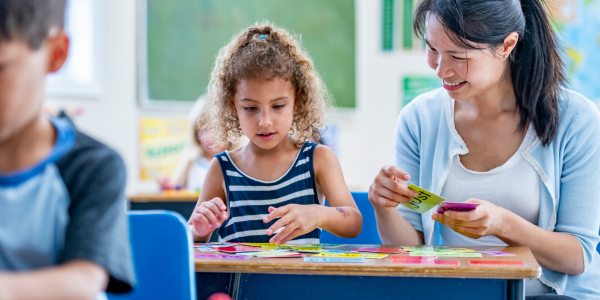
You might see your child covering their ears at school pick‑up, chewing on their collar while doing homework, or coming home very restless or exhausted after a school day. These can be signs that your child is either trying to get more sensory input (sensory seeking) or trying to get away from it (sensory avoiding). Transitions into new settings, such as starting school or moving to a new year level, can make these behaviours more noticeable.
When we notice these signs early and respond with calm support, we can often help children feel safer in their bodies and sometimes prevent meltdowns or big moments of distress before or after school. This shared calming is called co‑regulation. It starts with understanding what your child’s behaviour is telling you and offering the right kind of sensory support at home and, where possible, in the school setting.
What Are Sensory Seeking and Sensory Avoiding at School?
Our brains constantly receive information from our senses to help us understand and respond to the world. At school, children are processing extra sensory input: bells, chatter, movement, bright displays, different smells and varied routines. Each child’s brain handles this in its own way, so what feels “fine” for one child may feel “too much” or “not enough” for another.
- Sensory seeking: Some children look for extra input (for example, lots of movement, pressure or sound) to help their bodies feel steady and calm in structured environments like classrooms.
- Sensory avoiding: Other children try to move away from certain sounds, textures, lights or movements that feel uncomfortable or overwhelming, such as loud assemblies or crowded corridors.
A child can be both sensory seeking and sensory avoiding, and this can change across the day. For example, a child might seek movement at recess, then avoid noise in the classroom after lunch.
The Seven Senses in Busy School Environments
All seven senses play a role in how your child copes with school:
- Visual: Bright lights, colourful displays, moving peers and screens in classrooms.
- Auditory: Bells, announcements, group work, scraping chairs and playground noise.
- Tactile: School uniforms, shoes, socks, playground surfaces, craft materials.
- Vestibular: Movement during sport, PE, playground games and transitions between rooms.
- Proprioceptive: Carrying bags, climbing playground equipment, writing, pushing doors.
- Smell: Canteen smells, lunchboxes, cleaning products, other students’ food.
- Interoceptive: Noticing hunger, thirst, needing the toilet or feeling tired during the day.
When the mix of sensory input feels balanced, it can help your child focus, learn and join in. When it feels “too much” or “not enough”, you may see more sensory seeking or avoiding behaviours either at school, at home, or both.
Sensory Seeking Behaviours You Might Notice
Children who are sensory seeking are often trying to get more input to feel calm, focused or organised. In the context of school, you might notice:
- Constant fidgeting with pencils, clothes, hair or small objects.
- Rocking on the chair, getting up often or finding reasons to move around the room.
- Running, climbing or jumping a lot in the playground, sometimes more than peers.
- Leaning on teachers, peers or parents, or sitting very close to others.
- Touching classroom materials, walls or other people’s belongings repeatedly.
- Chewing on collars, sleeves, pen lids or other items while working.
- Spinning on playground equipment or seeking fast, intense movement in PE.
These behaviours are not simply “disruptive” or “off‑task”; they are often your child’s way of saying, “My body needs more input to feel okay in this busy environment.”
Sensory Avoiding Behaviours You Might Notice
Children who are sensory avoiding are usually trying to escape or reduce sensory input that feels too intense or uncomfortable. Around school, you might notice:
- Wanting to leave the classroom, playground or assembly quickly, or hiding in quieter spots.
- Covering their ears when the bell rings, during music sessions or in loud group activities.
- Becoming very upset about certain parts of the uniform (tags, seams, fabrics, tight shoes).
- Avoiding certain school activities like messy play, group games or noisy sports.
- Being very selective with food at school, or not wanting to eat in noisy lunch areas.
- Coming home from school exhausted, tearful or “shut down” after a day of managing sensory input.
These behaviours are a form of communication: “This feels like too much for me right now; I need it to be quieter, slower, softer or more predictable.”
What Does This Mean for Your Child at Different School Stages?
Sensory needs can look different at each stage:
- Pre‑kindergarten and kindergarten: You might see big reactions to noise, transitions or group times, or a strong drive for messy play and movement.
- Early primary: Challenges may show up with sitting still on the mat, following multi‑step instructions, coping with noise in the classroom or playground.
- Upper primary and high school: Sensory needs might be less obvious but show up as fatigue after school, avoidance of crowded spaces, difficulty focusing in noisy rooms, or strong clothing and uniform preferences.
Practical Ways to Support Your Child at Home and With School
Once you start noticing patterns, you can gently support your child’s sensory needs in ways that fit their setting and age. For example:
At home (for all ages):
- Build in calm “transition time” before and after school (quiet play, reading, or a walk).
- Offer safe movement or “heavy work” (pushing, pulling, carrying) before homework.
- Use softer clothing or remove tags where possible if uniform textures are difficult.
- Provide safe chewable or fidget items, if appropriate for your child’s age and school rules.
In partnership with educators:
- Share what you notice at home with teachers, your Key Worker or OT.
- Ask about simple supports (for example, a quieter seating position, movement breaks, or a calmer spot in the room).
- For older children, involve them in planning – ask what helps them feel calmer or more focused at school.
- Work together on a simple, shared plan so strategies at home and school are consistent.
You do not need to solve everything on your own. A Key Worker or Occupational Therapist can help you understand what is happening for your child and suggest strategies that work in both home and school environments.
When to Seek More Support
If you are concerned, or if these behaviours are making school and home life harder for your child or your family, it can be very helpful to talk with your Key Worker, Occupational Therapist and school team. Together, you can:
- Identify which senses are most challenging or most supportive for your child at school.
- Understand whether your child is mostly seeking, avoiding, or a mix of both across the school day.
- Develop practical, everyday strategies that can be used in class, in the playground, during transitions and at home.
Working as a team means your child is more likely to feel understood, safe and supported in their new school environment, and you can feel more confident responding to their sensory needs as they grow.
Read more about our therapy services and what you can expect when our dedicated team works with your child and family to achieve the outcomes you desire.
To explore how we can assist your child and family, please complete our online enquiry form or call us at 1300 179 131.

Become part of the Everyday Independence community by joining our monthly newsletter to learn about latest news and events across Australia.
