NDIS registered provider | For children aged 0–8 with an NDIS plan | Support at home, childcare, kinder and school
We work alongside your family to help your child build skills for everyday life. Support can happen at home, in childcare, kinder, school or the community.
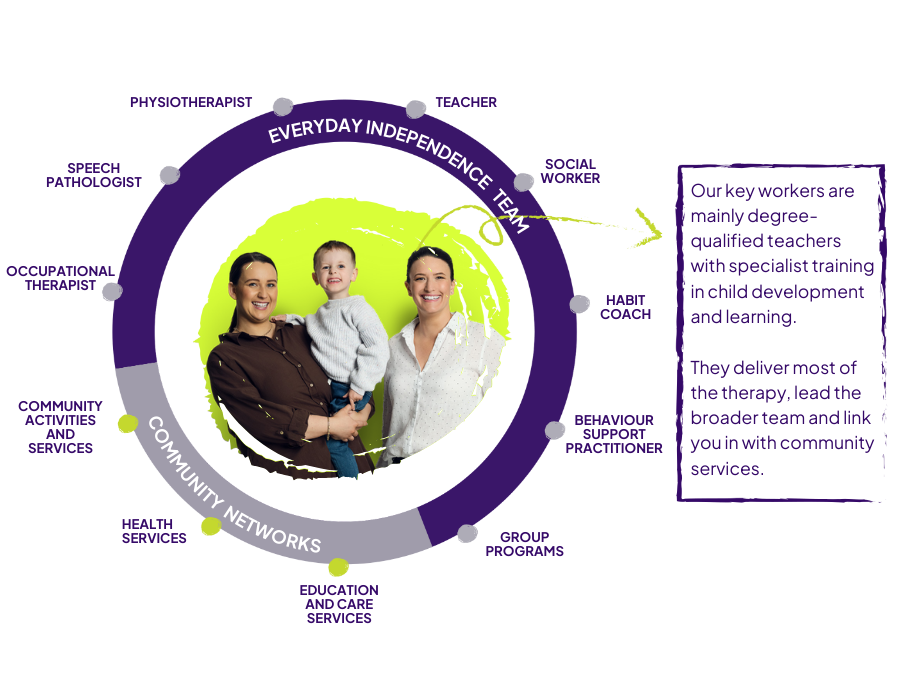
Your child’s support is shaped around their goals and may include occupational therapy, speech pathology, physiotherapy or assistive technology. Their early childhood key worker plans and leads the support, coordinating with the therapists and practitioners involved so everyone works towards the same goals.
One early childhood key worker, with the right support around your child
You know your child best. Your early childhood key worker takes time to understand your child’s strengths, interests and the things your family would like to work towards.
Your key worker is your main point of contact and usually provides most of your child’s regular support. They help you practise strategies during play, routines and activities your child already knows.
Your child’s team can also include occupational therapists, speech pathologists and physiotherapists. Depending on your child’s goals, these therapists may assess or work directly with your child, share strategies with you and your key worker, or work alongside the team. Your key worker coordinates everyone’s support around the goals you’ve agreed together.
How each therapist may help
Your key worker leads the support, so you have one main person to contact and a team working towards your child’s goals and participation in everyday life.
Occupational therapy can help with everyday activities, fine motor skills, sensory needs and independence. An occupational therapist may also assess and prescribe assistive technology.
Speech pathology can help with communication, language, speech, social communication and feeding.
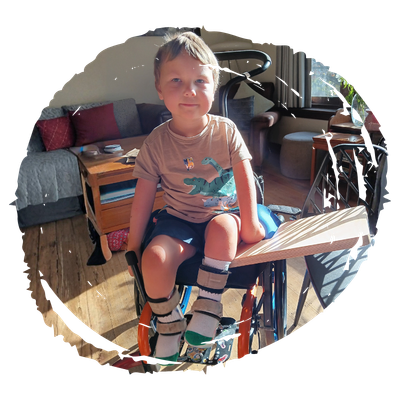
Physiotherapy can help with movement, strength, balance, coordination and taking part in physical activities. Physiotherapists may also assess and prescribe a customised wheelchair and other equipment to support mobility, independence and participation.
A parent tells their key worker that mornings feel rushed and their child finds it hard to get dressed. Together, they look at what’s making the routine difficult and choose a small step to practise. The key worker might suggest using a simple picture sequence and give the parent time to try it during the week. If the child’s fine motor skills are making dressing harder, the key worker can involve an occupational therapist for advice or direct support. The key worker checks in with the parent and adjusts the strategy together.
What would your child like to work towards?
Every child is different. Together, we’ll identify goals that matter to your child and family. This may include:
Communicating needs, ideas and choices
Joining in play and connecting with other children
Feeling more comfortable in busy or unfamiliar places
Managing emotions and everyday changes
Taking part in dressing, mealtimes and other routines
Developing movement, coordination and fine motor skills
Building confidence with learning and play
Getting ready for kinder, school or other transitions
Using equipment or assistive technology
Taking part in family and community activities
How to start early childhood supports
Enquire or make a referral using the form below. We aim to get back to you within 24 hours.
Talk with our team about your goals, funding, service options and availability.
Plan your support with your practitioner including where your sessions happen.
If you don’t currently have an NDIS plan, read our blog which explains eligibility for the NDIS.
You’re an important part of your child’s team. Your key worker works alongside you and the people who are important in your child’s life, such as educators and other carers.
They can share practical strategies to try during everyday routines, help you understand your child’s support and connect with local services and opportunities.
Our aim is to help your child build skills while helping your family feel informed and supported.
Ready to start early childhood supports?
Who are you seeking services for? Select an option below to begin your enquiry.
For parents and carers
You can contact us to talk about your child, your goals and the support available in your area.
For referrers
Refer a child you support, including what matters to the child and family, the goals they would like support with, and any relevant NDIS plan or service information.
What families are saying
I love the support from Keren, our early childhood key worker.
She really takes the time to understand Bailey, what he needs and will offer me any support or advice if I’m stuck on something.
We’re not running around trying to find the support for Bailey, Keren is there and has helped majorly.
– Ainsley, Bailey’s mum
Find early childhood supports near you
We provide NDIS early childhood supports across metropolitan and regional Australia. Enter your postcode below to check whether we service your area or find your nearest therapy hub.
Your early childhood key worker builds a team around your child’s goals, bringing in the right therapists and supports when additional expertise is needed. Your child’s team may include:
Early childhood supports help children aged 0–8 build skills and take part in everyday life. Support is shaped around each child’s strengths, needs and goals, and can involve working with their family and other people in their life.
At Everyday Independence, an early childhood key worker plans and leads your child’s support and brings in other therapists when their expertise is needed.
Who is a key worker and how do they help my child and family?
Your key worker is your main point of contact. They get to know your child and family, help set goals, provide regular support and coordinate input from other therapists.
Your key worker usually delivers most of your child’s day-to-day support. They can involve an occupational therapist, speech pathologist, physiotherapist or another practitioner when your child’s goals call for their expertise.
I only need a paediatric occupational therapist or paediatric speech pathologist for my child. How can a key worker help?
Many families start by looking for a paediatric occupational therapist or speech pathologist. While these professionals provide valuable support, a child’s development often involves a range of connected skills, including communication, play, social interaction, learning, and independence.
This is why early childhood key workers are at the heart of our early intervention approach. They lead, plan and deliver your early intervention services. A key worker understands how children develop and takes a whole-child approach. They work with your family to identify your child’s goals and create a plan that supports progress in everyday life. When additional specialist support is needed, they can involve an occupational therapist, speech pathologist, or other professionals at the right time.
This means your family receives the right support when it’s needed, without having to coordinate multiple services yourself. Together, we’ll help your child build skills and confidence to participate more fully at home, in childcare, at school, and in the community.
Can autistic children access NDIS early childhood supports?
Yes. We support children with autism, autistic children, and those on the autism spectrum through personalised early childhood intervention services. Our team understands that every autistic child has unique strengths, interests, and support needs. Starting early gives children on the autism spectrum the best opportunity to build strong foundations for learning and development.
How do I find the right therapy support for my child?
Finding the right therapy provider is about more than finding someone nearby. It’s important to find a team that takes the time to understand your child, your family and what’s important to you.
When speaking with a provider, consider asking:
Where does support take place?
Children often learn best in the places they spend their time. Ask whether support can be delivered at home, childcare, kindergarten, school or in the community.
How will you involve me and my family?
You know your child best. Look for a provider that works alongside parents and carers, providing practical strategies that can be used in everyday life.
Will my child have one therapist or a team?
Some providers, like Everyday Independence, use a key worker approach. This means one therapist gets to know your child and family well while bringing in other therapists, such as occupational therapists, speech pathologists, physiotherapists, behaviour support practitioners, and other practitioners when needed.
How will you help my child achieve their goals?
Ask how goals are set, how progress is measured and how support helps your child participate in everyday activities that matter to your family. We work with you to set goals, and regularly measure your child’s progress towards these goals to ensure they’re getting the right supports and the best outcomes from their NDIS funding.
How can a key worker help my child develop fine motor skills?
Fine motor skills are the small movements we use every day for activities such as drawing, colouring, using scissors, getting dressed, eating with cutlery and playing with toys.
If your child needs support with fine motor skills, your key worker can help them build confidence and independence through everyday activities and routines. Your key worker may also bring in an occupational therapist to provide additional support and strategies when needed.
Just as importantly, your key worker works alongside you. They will show you practical ways to help your child practise and develop their skills during everyday routines at home, childcare, kindergarten and in the community.
At Everyday Independence, we focus on building skills where life happens. By supporting both your child and the people around them, we create more opportunities for learning, practice and success every day.
What are the best evidence-based therapies for children with developmental delays?
The best therapy depends on your child’s needs and goals. Children may benefit from allied health therapies such as occupational therapy, speech pathology, physiotherapy, positive behaviour support or a combination of supports. At Everyday Independence, a key worker helps families access the right mix of therapies while building skills through everyday routines and activities.
What is early childhood intervention speech therapy?
Early childhood intervention speech therapy helps young children develop communication, language, speech, feeding and social interaction skills. At Everyday Independence, key workers and speech pathologists provide the right support when it’s needed.
Where will my child receive support?
Support may take place at home, in childcare, kinder, school or the community. The best location depends on your child’s goals and where they can practise the skills they’re working on.
More frequently asked questions are available on the key worker model, the background and experience of our key workers, and how we deliver early childhood supports.
Become part of the Everyday Independence community by joining our monthly newsletter to learn about latest news and events across Australia.